

Building the perfect meal doesn’t require a culinary degree or a mountain of dishes. Paleo Buddha Bowls provide a streamlined system for getting high-quality nutrition into your body with minimal friction. These bowls focus on the fundamental pillars of health: clean protein, healthy fats, and fiber-rich vegetables.
You will experience a satisfying contrast between warm roasted sweet potatoes and cool, crisp greens, all tied together with a velvety tahini dressing. This recipe eliminates the guesswork of healthy eating by providing a repeatable framework for your weekly meal prep. If you value your time and your health, Paleo Buddha Bowls are the ultimate high-performance fuel.
Why You’ll Love This Recipe
- Maximum Efficiency: You can roast all your vegetables on a single sheet pan, which minimizes cleanup and saves valuable time.
- Nutrient Density: Every ingredient in these Paleo Buddha Bowls serves a functional purpose, providing essential vitamins without any inflammatory fillers.
- Full Customization: The modular nature of this recipe allows you to swap proteins and vegetables based on what you currently have in your refrigerator.
- Long-Term Satiety: The combination of fiber and healthy fats ensures you stay full and focused throughout your workday.
Ingredients You’ll Need
Success starts with high-quality components. When you assemble Paleo Buddha Bowls, you want the freshest produce and the cleanest oils possible. Avoid seed oils like canola or vegetable oil; instead, rely on the stability of olive or avocado oil. Here is exactly what you need to create a base for four high-quality meals.
| Category | Ingredient | Quantity |
|---|---|---|
| Base | Fresh Kale or Arugula | 4 Cups |
| Roasted Carb | Sweet Potatoes (cubed) | 2 Large |
| Protein | Chicken Breast or Salmon Fillets | 1 lb |
| Vegetables | Broccoli Florets or Cauliflower | 2 Cups |
| Healthy Fat | Ripe Avocado | 2 Whole |
| Crunch | Pumpkin Seeds (Pepitas) | 1/4 Cup |
| Dressing | Tahini, Lemon Juice, Garlic | To Taste |
| Oil | Extra Virgin Olive Oil | 3 Tablespoons |
Substitutions & Variations
Note: This video is for demonstration purposes and may use a slightly different method.
The beauty of Paleo Buddha Bowls lies in their versatility. You do not need to follow this list to the letter if you have other quality ingredients on hand. For the protein, you can easily swap the chicken for grass-fed ground beef or even a few hard-boiled eggs if you are in a rush.
If you find sweet potatoes too heavy, try using roasted butternut squash or carrots instead. These swaps keep the recipe within Paleo guidelines while preventing palate fatigue.
For those who prefer a different flavor profile, consider changing the dressing. While tahini offers a creamy texture, a simple whisking of olive oil, apple cider vinegar, and a teaspoon of raw honey creates a bright vinaigrette that complements the roasted elements. If you want more heat, add a pinch of crushed red pepper flakes or a dash of Paleo-compliant hot sauce. The core structure of the Paleo Buddha Bowls remains the same: protein, fat, and fiber.
If you’re looking to enhance your Paleo Buddha Bowls, consider pairing them with a hearty soup like Paleo White Bean Chowder. This delicious option adds depth and supports your healthy eating journey with rich flavors.
Step-by-Step Instructions
- Prepare the Oven: Preheat your oven to 400°F (200°C). Efficiency starts with a hot oven. Line a large rimmed baking sheet with parchment paper to ensure a non-stick surface without the need for excess cleaning later.
- Prep the Vegetables: Peel and cube your sweet potatoes into 1-inch pieces. Cut the broccoli into bite-sized florets. Place them on the baking sheet and drizzle with two tablespoons of Extra Virgin Olive Oil. Season generously with sea salt and black pepper.
- Add the Protein: Move the vegetables to the sides of the pan to create space in the center. Place your chicken or salmon in the middle. Season the protein with garlic powder and a bit more olive oil. This single-pan method is the secret to perfect Paleo Buddha Bowls.
- Roast: Slide the tray into the oven. Bake for 20 to 25 minutes. If you are using salmon, check it at the 15-minute mark, as it cooks faster than chicken. The vegetables should be fork-tender and slightly caramelized on the edges.
- Massage the Kale: While the oven does the work, place your kale in a large mixing bowl. Add a teaspoon of olive oil and a pinch of salt. Use your hands to massage the kale for 2 minutes. This breaks down the tough fibers and makes the base of your Paleo Buddha Bowls much more palatable.
- Create the Dressing: In a small jar, combine 1/4 cup tahini, the juice of one lemon, one minced garlic clove, and two tablespoons of warm water. Shake vigorously until smooth. If it is too thick, add water one teaspoon at a time.
- Assemble: Divide the massaged kale into four bowls. Top with the roasted sweet potatoes, broccoli, and protein. Add half an avocado to each bowl and sprinkle with pumpkin seeds. Drizzle the tahini dressing over the top and serve immediately.
Pro Tips for Success
To master Paleo Buddha Bowls, you must focus on the texture. Many people fail because their vegetables turn out mushy or their greens stay too tough. To avoid mushy vegetables, ensure you do not crowd the baking sheet.
If the vegetables are too close together, they will steam instead of roast. Use two pans if necessary to give every piece of sweet potato its own space. This ensures a crisp exterior and a soft interior.
Another technical tip involves the dressing. Tahini brands vary significantly in consistency. If your tahini is at the bottom of the jar and very dry, blend it with a bit of Avocado Oil before mixing the dressing.
This restores the creamy texture required for high-quality Paleo Buddha Bowls. Furthermore, always season your avocado separately with a tiny pinch of sea salt and lemon juice to prevent it from browning if you aren’t eating the bowl immediately.
Finally, think about the “assembly line” approach. If you are making these for the entire week, set out four glass containers and distribute each ingredient evenly. This systematic approach reduces decision fatigue during the busy work week and ensures every portion of your Paleo Buddha Bowls is balanced.
For those mastering the perfect texture in your bowls, check out the One-Pan Broccoli Snack. This dish ensures you achieve the ideal roast without the dreaded mushy vegetables.
Storage & Reheating Tips
Paleo Buddha Bowls are designed for meal prep. If you store them correctly, they will stay fresh for up to four days in the refrigerator. Use airtight glass containers rather than plastic to maintain the flavor and integrity of the ingredients.
Store the dressing in small, separate containers or glass jars. Adding the dressing right before consumption prevents the kale from becoming soggy.
When it comes to reheating, you have two options. You can eat the bowls cold, which is often preferred for a quick lunch. However, if you prefer a warm meal, reheat only the roasted vegetables and protein in a pan over medium heat or in an air fryer for 3 minutes at 350°F.
This restores the crispness that a microwave would otherwise destroy. Once the warm components are ready, add them back to the fresh greens and avocado. This method preserves the “fresh vs. roasted” contrast that makes Paleo Buddha Bowls so satisfying.
What to Serve With This Recipe
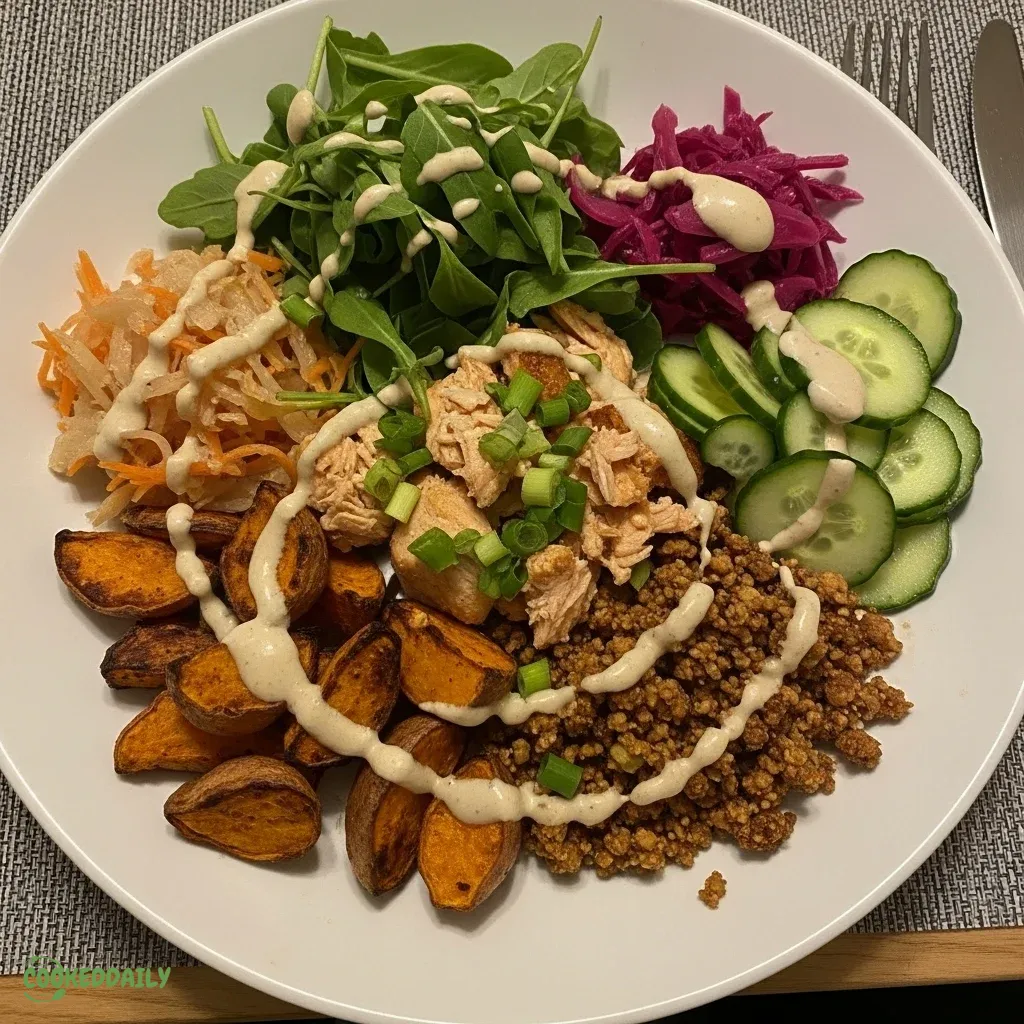
While Paleo Buddha Bowls are a complete meal on their own, you can pair them with simple sides to increase the volume if you have a particularly high activity level. A side of fermented vegetables, such as sauerkraut or kimchi, adds a probiotic boost that aids digestion. The acidity of fermented foods also cuts through the richness of the tahini dressing and avocado.
If you need additional hydration or a light starter, a simple cucumber salad with apple cider vinegar and fresh dill works perfectly. For those who want more warmth, a small bowl of bone broth is an excellent Paleo-compliant companion. These pairings stay within the minimalist philosophy: they require almost no cooking time but significantly enhance the nutritional profile of your Paleo Buddha Bowls.
To complement your Paleo Buddha Bowls, you can serve them alongside light dishes like One-Pot Spinach Stew. This nutritious side not only enriches your meal but also aids in digestion with its probiotic elements.
FAQs
Are Paleo Buddha Bowls keto-friendly?
As written, this recipe contains sweet potatoes, which are higher in carbohydrates. To make Paleo Buddha Bowls keto-friendly, simply replace the sweet potatoes with roasted cauliflower, zucchini, or extra leafy greens. The high fat content from the avocado and tahini already fits well within a ketogenic framework.
Can I make this recipe vegan?
Yes. While this version uses chicken or salmon, you can easily pivot. To keep it Paleo and vegan, replace the animal protein with extra nuts, seeds, or hemp hearts. While legumes like chickpeas are common in standard Buddha bowls, they are not Paleo-compliant, so stick to high-quality fats and seeds for your protein source in Paleo Buddha Bowls.
What is the best way to keep the avocado fresh?
If you are prepping Paleo Buddha Bowls in advance, do not slice the avocado until you are ready to eat. If you must slice it ahead of time, squeeze fresh lemon or lime juice over the flesh and press plastic wrap directly onto the surface to minimize oxygen exposure. This will keep the avocado green for about 24 hours.
Paleo Buddha Bowls emphasize nutrition by combining wholesome ingredients tailored to promote healthful eating habits. These bowls exemplify the concept of clean eating and can be a wonderful addition to any diet, offering versatility and flavor, as explained in this overview of clean eating.
Nutrition Information (per serving)
This data represents a standard serving of Paleo Buddha Bowls including chicken and dressing. Actual values may vary based on specific ingredient sizes and brands used.
| Metric | Value |
|---|---|
| Calories | 540 kcal |
| Protein | 32g |
| Total Fat | 28g |
| Net Carbohydrates | 24g |
| Fiber | 12g |
By following this structured approach, you ensure that your Paleo Buddha Bowls are a consistent win for your health and your schedule. This is functional eating at its finest.
Print
Paleo Buddha Bowls
- Total Time: 45 mins
- Yield: 4 servings 1x
- Diet: Gluten Free
Description
Paleo Buddha Bowls are a nutritious and versatile meal option that focuses on clean protein, healthy fats, and fiber-rich vegetables, all topped with a creamy tahini dressing. This recipe is designed to maximize efficiency and nutrient density while allowing for easy customization based on available ingredients.
Ingredients
4 cups Fresh Kale or Arugula
2 large Sweet Potatoes (cubed)
1 lb Chicken Breast or Salmon Fillets
2 cups Broccoli Florets or Cauliflower
2 whole Ripe Avocado
1/4 cup Pumpkin Seeds (Pepitas)
Tahini, Lemon Juice, Garlic to Taste
3 tablespoons Extra Virgin Olive Oil
Instructions
- Preheat your oven to 400°F (200°C) and line a large rimmed baking sheet with parchment paper
- Peel and cube sweet potatoes into 1-inch pieces and cut broccoli into bite-sized florets. Place on the baking sheet and drizzle with 2 tablespoons of Extra Virgin Olive Oil, seasoning generously with sea salt and black pepper
- Move the vegetables to the sides of the pan, creating space in the center. Place your chicken or salmon in the middle, seasoning with garlic powder and a bit more olive oil
- Bake in the preheated oven for 20 to 25 minutes, checking salmon at the 15-minute mark
- While roasting, massage kale in a large mixing bowl with 1 teaspoon of olive oil and a pinch of salt for 2 minutes
- Combine tahini, lemon juice, minced garlic, and warm water in a small jar, shaking until smooth
- Divide massaged kale into bowls, top with the roasted sweet potatoes, broccoli, and protein. Add half an avocado to each bowl, sprinkle with pumpkin seeds, and drizzle with dressing before serving
Notes
For variations, swap proteins and vegetables based on availability.
Store assembled bowls without dressing for optimal freshness.
- Prep Time: 20 mins
- Cook Time: 25 mins
- Category: Dinner
- Method: Baking
- Cuisine: American
Nutrition
- Serving Size: 1 bowl
- Calories: 540 kcal
- Sugar: 0 g
- Sodium: 600 mg
- Fat: 28 g
- Saturated Fat: 4 g
- Unsaturated Fat: 12 g
- Trans Fat: 0 g
- Carbohydrates: 24 g
- Fiber: 12 g
- Protein: 32 g
- Cholesterol: 120 mg