

Starting your day with a nutrient-dense, high-protein meal sets the biological tone for your entire afternoon. This Sausage and Egg Casserole offers a perfect harmony of savory flavors and supportive macronutrients that keep your blood sugar stable. By combining lean proteins with fiber-rich vegetables, you create a breakfast that fuels your brain and nourishes your muscles.
Most traditional breakfast bakes rely on heavy creams or processed meats, but this version prioritizes “clean” ingredients for better digestion. You will love the golden, slightly crisp edges of the eggs paired with the hearty texture of the sausage. This recipe simplifies your morning routine while ensuring you do not compromise on your health goals. Preparing a Sausage and Egg Casserole in advance is a gift to your future self, providing a reliable source of energy during busy work weeks.
Why You’ll Love This Sausage and Egg Casserole
- Blood Sugar Stability: The high protein content from pasture-raised eggs and lean sausage prevents the mid-morning energy crashes common with carb-heavy breakfasts.
- Meal Prep Friendly: You can easily bake this Sausage and Egg Casserole on a Sunday and enjoy nutritious portions for several days.
- Anti-Inflammatory Profile: We swap refined seed oils for healthy avocado oil and include colorful vegetables to boost your daily antioxidant intake.
Ingredients You’ll Need
Quality matters when it comes to the building blocks of your health. I recommend sourcing nitrate-free, organic sausage and pasture-raised eggs whenever possible to maximize Omega-3 fatty acids and minimize chemical exposure. This Sausage and Egg Casserole uses whole, recognizable ingredients to ensure every bite provides medicinal value to your body.
| Ingredient | Quantity | Nutritional Benefit |
|---|---|---|
| Pasture-Raised Eggs | 10-12 large | Rich in choline for brain health and high-quality protein. |
| Nitrate-Free Turkey or Chicken Sausage | 1 lb | Lean protein source without inflammatory additives. |
| Red Bell Pepper | 1 large, diced | High in Vitamin C to support immune function. |
| Fresh Baby Spinach | 2 cups, chopped | Provides iron, folate, and essential dietary fiber. |
| Onion | 1 medium, diced | Contains quercetin, a potent natural antioxidant. |
| Avocado Oil | 1 tablespoon | A heat-stable monounsaturated fat for healthy cooking. |
| Unsweetened Almond Milk | 1/2 cup | Adds creaminess without the inflammatory properties of dairy. |
| Sea Salt & Black Pepper | To taste | Mineral-rich seasoning for optimal flavor. |
Substitutions & Variations
Note: This video is for demonstration purposes and may use a slightly different method.
As a nutritionist, I understand that every body has unique needs. If you follow a ketogenic diet, this Sausage and Egg Casserole is naturally low-carb and perfectly fits your lifestyle. For those who are strictly dairy-free, ensure your sausage does not contain hidden milk powders or fillers.
If you prefer a vegetarian option, you can substitute the meat with crumbled tempeh or extra sautéed mushrooms to maintain a “meaty” texture while increasing your plant-based protein.
To add a bit of healthy spice, consider incorporating diced jalapeños or a dash of cayenne pepper, which can help stimulate metabolism. If you find you need more carbohydrates to support an active lifestyle, layering thinly sliced sweet potatoes at the bottom of the Sausage and Egg Casserole adds beneficial fiber and complex sugars for sustained endurance.
For those seeking a protein-rich alternative to traditional breakfasts, our High Protein Sausage Breakfast Biscuits offer a delightful option. These biscuits can complement your Sausage and Egg Casserole nicely, enhancing your meal’s nutritional profile.
Step-by-Step Instructions
- Preheat and Prepare: Start by preheating your oven to 375°F (190°C). Lightly grease a 9×13 inch baking dish with a small amount of Avocado Oil to prevent sticking without using inflammatory sprays.
- Sauté the Vegetables: Heat the remaining Avocado Oil in a large skillet over medium heat. Add the diced onions and bell peppers. Sauté for 5-7 minutes until the onions become translucent and the peppers soften.
- Cook the Sausage: Add the nitrate-free sausage to the skillet with the vegetables. Break the meat apart with a spoon and cook until it is no longer pink. If you are using pre-cooked sausage, simply brown it slightly for extra flavor.
- Wilt the Greens: Stir in the chopped baby spinach during the last 60 seconds of cooking. The residual heat will wilt the greens, preserving their delicate nutrients while making them easier to incorporate into the Sausage and Egg Casserole.
- Whisk the Eggs: In a large mixing bowl, crack the 10-12 eggs. Pour in the unsweetened almond milk and season with sea salt and black pepper. Whisk vigorously until the mixture is uniform and slightly frothy, which ensures a light and airy texture.
- Assemble the Casserole: Transfer the cooked sausage and vegetable mixture into your prepared baking dish, spreading it out into an even layer. Pour the egg mixture over the top, making sure it settles into all the crevices.
- Bake to Perfection: Place the dish in the center rack of the oven. Bake your Sausage and Egg Casserole for 30 to 35 minutes, or until the center is set and the edges are beautifully golden brown.
- Rest and Serve: Remove the casserole from the oven and let it sit for at least 5 minutes before slicing. This resting period allows the structure to firm up, making it much easier to serve clean, square portions.
Pro Tips for Success
To achieve the best results with your Sausage and Egg Casserole, pay close attention to the moisture content of your vegetables. If you use frozen spinach instead of fresh, make sure to squeeze out every drop of excess water; otherwise, the casserole may become soggy. Furthermore, whisking the eggs with a bit of “air” helps the Sausage and Egg Casserole rise and maintain a fluffy consistency.
If you want a more “crust-like” bottom without using grains, you can sear the sausage and vegetable mixture quite well before adding it to the pan. This creates a caramelized base that enhances the overall flavor profile. Lastly, always use a thermometer if you are unsure of doneness; the internal temperature of a perfectly cooked Sausage and Egg Casserole should reach 160°F (71°C).
If you love the combination of flavors found in the Sausage and Egg Casserole, you might also enjoy our Savory Sausage and Cheese Breakfast Casserole. This recipe takes the beloved breakfast bake to another level with cheese that melts perfectly in every bite.
Storage & Reheating Tips
Managing your leftovers properly ensures your Sausage and Egg Casserole remains a healthy and safe option throughout the week. Once the casserole has cooled completely, cut it into individual portions and store them in airtight glass containers. Glass is preferable to plastic to avoid chemical leaching, especially when reheating.
You can keep the Sausage and Egg Casserole in the refrigerator for up to 4 days. For longer storage, this recipe freezes exceptionally well. Wrap individual slices in parchment paper and place them in a freezer-safe bag for up to 3 months. When you are ready to eat, reheat your Sausage and Egg Casserole in the oven or an air fryer at 350°F until warmed through, which helps maintain the firm texture better than a microwave.
What to Serve With This Recipe
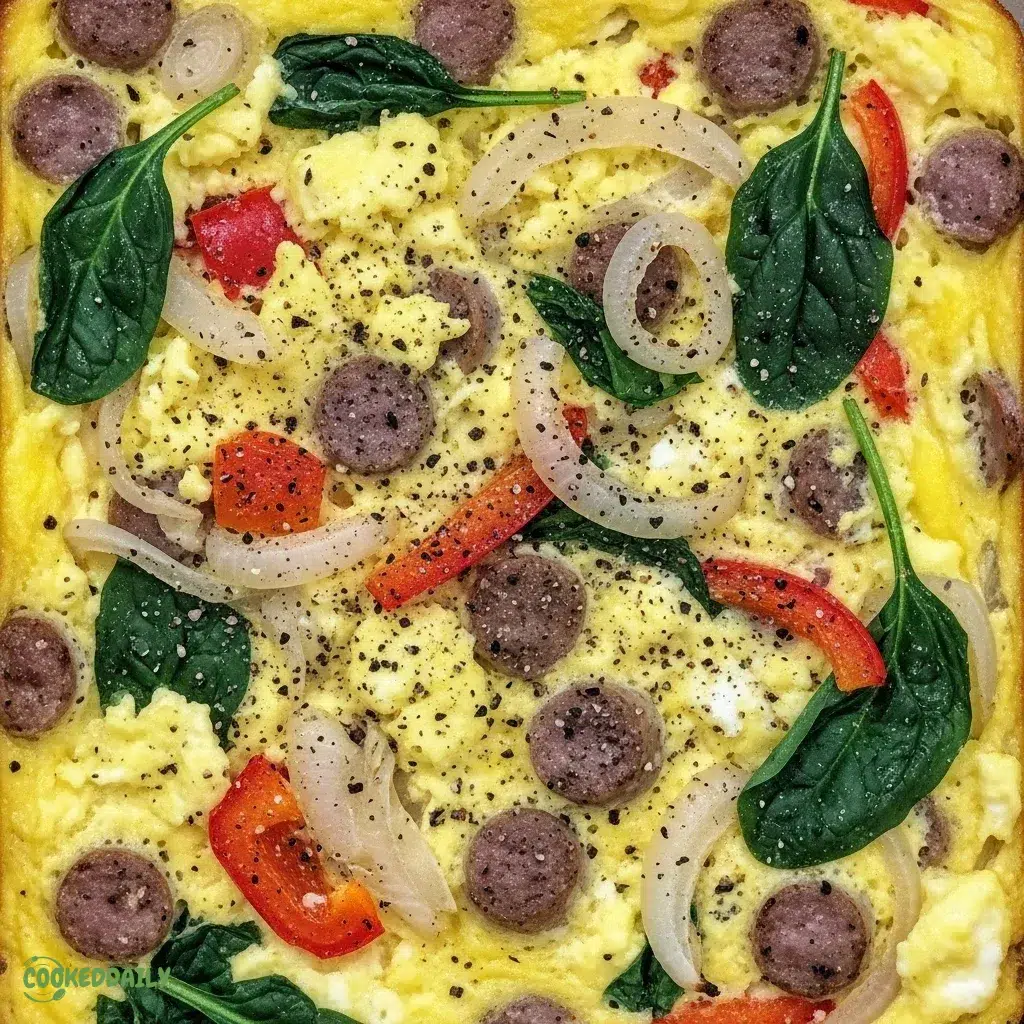
To create a truly balanced “food as medicine” meal, I recommend pairing a slice of Sausage and Egg Casserole with a fresh side dish. A simple arugula salad tossed in lemon juice and extra virgin olive oil provides bitter compounds that aid in digestion. Alternatively, a small side of fermented vegetables, like sauerkraut or kimchi, introduces beneficial probiotics to your gut, which complements the high protein content of the Sausage and Egg Casserole.
If you are serving this for a weekend brunch, a side of roasted asparagus or steamed broccoli adds extra micronutrients and crunch. Avoid sugary juices and instead opt for a cup of green tea or black coffee to keep your metabolic health in check while enjoying your Sausage and Egg Casserole.
To create a balanced meal alongside your Sausage and Egg Casserole, consider adding Air Fryer Scotch Eggs as a protein-packed side. This pairing not only enhances the health benefits but also adds some variety to your breakfast spread.
FAQs
Can I make this Sausage and Egg Casserole the night before?
Absolutely. You can assemble the entire Sausage and Egg Casserole, cover it tightly, and store it in the refrigerator overnight. In the morning, simply pop it in the oven. You may need to add 5-10 minutes to the baking time since the dish will be cold when it starts cooking.
Is this recipe suitable for a weight loss diet?
Yes, this Sausage and Egg Casserole is an excellent choice for weight management. Because it is high in protein and healthy fats, it promotes satiety, which helps you naturally consume fewer calories throughout the day by reducing cravings and hunger pangs.
How can I make this Sausage and Egg Casserole more “clean”?
Focus on the source of your meat. Look for “pasture-raised,” “nitrate-free,” and “sugar-free” on the labels. Using organic vegetables and pasture-raised eggs ensures that your Sausage and Egg Casserole is free from pesticides and higher in essential nutrients like Vitamin D and Omega-3s.
Sausage and Egg Casserole is a versatile dish that brings together the satisfying flavors of sausage and eggs, making it a popular choice for breakfast or brunch gatherings. This hearty meal can be easily customized with various vegetables and seasonings, allowing for a range of delicious variations in preparation, as explained in this casserole overview.
Nutrition Information (per serving)
This nutritional profile reflects one generous slice of the Sausage and Egg Casserole, assuming the recipe is divided into 8 equal servings. It is a macronutrient-balanced meal designed to support metabolic health and muscle maintenance.
| Metric | Amount per Serving |
|---|---|
| Calories | 285 kcal |
| Protein | 22g |
| Total Fat | 19g |
| Saturated Fat | 5g |
| Carbohydrates | 4g |
| Fiber | 1g |
| Sugar | 1g |
| Sodium | 480mg |

Sausage and Egg Casserole
- Total Time: 55 mins
- Yield: 8 servings 1x
- Diet: Gluten Free
Description
This Sausage and Egg Casserole offers a perfect balance of savory flavors and nutrient-dense ingredients that stabilize blood sugar and provide essential proteins and fibers. It's a clean, healthy breakfast option that can be prepared in advance to simplify your morning routine.
Ingredients
10–12 large Pasture-Raised Eggs
1 lb Nitrate-Free Turkey or Chicken Sausage
1 large Red Bell Pepper, diced
2 cups Fresh Baby Spinach, chopped
1 medium Onion, diced
1 tablespoon Avocado Oil
1/2 cup Unsweetened Almond Milk
Sea Salt & Black Pepper to taste
Instructions
- Preheat your oven to 375°F (190°C) and grease a baking dish with avocado oil
- Sauté the diced onions and bell peppers in a skillet with avocado oil until soft
- Add the nitrate-free sausage to the skillet, breaking it apart and cooking until no longer pink
- Stir in the chopped baby spinach and allow it to wilt for a minute
- In a bowl, whisk together the eggs, almond milk, salt, and pepper until frothy
- Transfer the sausage mixture to the baking dish, pour the egg mixture over it, and spread evenly
- Bake for 30 to 35 minutes until set and golden brown around the edges
- Let rest for 5 minutes before serving
Notes
For a vegetarian option, substitute the sausage with crumbled tempeh or mushrooms.
You can prepare the casserole the night before and bake it in the morning.
- Prep Time: 20 mins
- Cook Time: 35 mins
- Category: Breakfast
- Method: Baking
- Cuisine: American
Nutrition
- Serving Size: 1 slice
- Calories: 285 kcal
- Sugar: 1g
- Sodium: 480mg
- Fat: 19g
- Saturated Fat: 5g
- Unsaturated Fat: 14g
- Trans Fat: 0g
- Carbohydrates: 4g
- Fiber: 1g
- Protein: 22g
- Cholesterol: 410mg