

Forget everything you think you know about rubbery, flavorless egg breakfasts. As a chef, I demand every dish offers a symphony of texture and depth, and these Baked Cottage Cheese Eggs deliver exactly that. By incorporating high-quality cottage cheese into fresh, pasture-raised eggs, we create a custard-like consistency that melts on the tongue.
This recipe transforms a simple high-protein staple into a gourmet experience that feels indulgent yet remains incredibly healthy. You will love how the gentle heat of the oven sets the eggs without drying them out. Whether you serve these at a weekend brunch or prep them for a busy work week, they represent the pinnacle of functional, delicious cooking. Let us elevate your morning routine with the incredible silkiness of Baked Cottage Cheese Eggs.
Why You’ll Love This Baked Cottage Cheese Eggs Recipe
- Incredible Texture: The cottage cheese melts into the eggs during the baking process, creating a velvety, souffle-like finish that traditional scrambled eggs simply cannot match.
- Protein Powerhouse: Combining two superior protein sources makes Baked Cottage Cheese Eggs an ideal fuel for muscle recovery and long-lasting satiety.
- Culinary Versatility: This base recipe acts as a canvas for high-quality herbs, spices, and seasonal vegetables, allowing you to showcase your culinary creativity.
- Effortless Preparation: You skip the constant stirring at the stove; the oven does the heavy lifting, ensuring perfectly cooked Baked Cottage Cheese Eggs every single time.
Ingredients You’ll Need
Quality is the foundation of flavor. When you select ingredients for Baked Cottage Cheese Eggs, prioritize freshness and origin. I always recommend pasture-raised eggs for their deep orange yolks and rich fat content. For the cottage cheese, look for a full-fat, small-curd variety without added thickeners or gums to ensure the cleanest flavor profile and the best melt.
- Pasture-Raised Eggs: These provide the structural integrity and a rich, buttery flavor profile.
- Full-Fat Cottage Cheese: I choose 4% milk fat for maximum creaminess; it acts as the secret weapon in these Baked Cottage Cheese Eggs.
- Avocado Oil: Use this to grease your baking dish; it has a high smoke point and a neutral flavor that won’t interfere with the eggs.
- Fresh Chives: These add a delicate onion note and a vibrant pop of color.
- Maldon Sea Salt: Hand-harvested salt flakes provide a clean salinity that enhances the natural sweetness of the dairy.
- Freshly Cracked Black Pepper: Grind your peppercorns just before adding them to release the essential oils and floral heat.
- Optional Smoked Paprika: A tiny pinch adds an earthy depth that complements the creaminess of the Baked Cottage Cheese Eggs.
Substitutions & Variations
Note: This video is for demonstration purposes and may use a slightly different method.
A great chef knows how to adapt. While the classic version of Baked Cottage Cheese Eggs is perfection, you can easily modify the ingredients based on what is in your larder or your specific dietary goals. Always stick to whole-food substitutions to maintain the nutritional integrity of the dish.
- Dairy Swaps: If you prefer a tangier finish, replace half of the cottage cheese with organic Greek yogurt. This adds a pleasant acidity while keeping the protein high.
- Green Infusions: Fold in finely chopped baby spinach or sautéed kale before baking your Baked Cottage Cheese Eggs to boost the micronutrient profile.
- Cheese Variations: For a sharper flavor, sprinkle a small amount of aged feta or sharp goat cheese over the top before placing the dish in the oven.
- Allum Swaps: If you lack chives, use the green tops of scallions or a very small amount of finely minced shallots for a more sophisticated aromatic base.
- Spice Profiles: Transform your Baked Cottage Cheese Eggs by adding a dash of cayenne pepper or a teaspoon of nutritional yeast for a “cheesy” flavor without extra dairy fats.
A great chef knows how to adapt. While the classic version of Baked Cottage Cheese Eggs is perfection, you can enhance your meal with a delightful twist by exploring a Low-Carb Baked Chicken that serves as a fantastic partner to this dish.
Step-by-Step Instructions
- Preheat and Prepare: Start by preheating your oven to 350°F (175°C). Use Avocado Oil to generously grease a ceramic baking dish or a high-quality silicone muffin tin. This ensures your Baked Cottage Cheese Eggs release perfectly without sticking.
- The Texture Secret: For the ultimate professional finish, place your cottage cheese in a high-speed blender for 30 seconds. Blending the cottage cheese removes the curds and creates a smooth liquid. This step is essential if you want your Baked Cottage Cheese Eggs to have a consistent, custard-like texture.
- Whisk the Base: In a large stainless steel bowl, crack your eggs. Whisk them vigorously until the yolks and whites are fully emulsified. Slow-pour the blended cottage cheese into the eggs while continuing to whisk.
- Season with Precision: Fold in your chopped chives, sea salt, and freshly cracked black pepper. If you are adding any sautéed vegetables, incorporate them now. Ensure the seasonings are distributed evenly throughout the Baked Cottage Cheese Eggs mixture.
- The Pour: Carefully pour the mixture into your prepared baking dish. If you are using a muffin tin, fill each cavity about three-quarters full to allow for a slight rise.
- Bake to Perfection: Place the dish on the center rack of the oven. Bake for 20 to 25 minutes. You want the edges to be set and slightly golden, while the center should have a very slight, “jiggly” give when shaken. Overbaking will result in a rubbery texture, so keep a close eye on your Baked Cottage Cheese Eggs during the final five minutes.
- Rest and Garnish: Remove the dish from the oven and let it rest for 3 to 5 minutes. This carry-over cooking completes the setting process. Garnish with more fresh chives and a final sprinkle of flaky salt before serving.
Pro Tips for Success
As a professional chef, I have learned that the smallest details make the biggest difference in the kitchen. To achieve the absolute best Baked Cottage Cheese Eggs, follow these technical pointers that separate home cooks from culinary experts.
- Room Temperature Ingredients: Always take your eggs and cottage cheese out of the refrigerator 20 minutes before you start. Cold ingredients can cause uneven baking and may lead to the fats separating.
- The Sieve Method: If you don’t want to use a blender, press your cottage cheese through a fine-mesh sieve. This breaks down the curds manually and yields a much more refined Baked Cottage Cheese Eggs texture.
- Don’t Over-Whisk: While you want the eggs and cheese emulsified, avoid whisking too much air into the mixture. Excess air causes the eggs to puff up like a souffle and then collapse into a dense, flat layer once cooled.
- Chef’s Tip – The Water Bath: For a truly restaurant-quality result, place your baking dish inside a larger pan filled with an inch of hot water. This “bain-marie” method insulates the Baked Cottage Cheese Eggs, ensuring the gentlest possible heat and preventing the protein from seizing.
- Check for Doneness: Use a digital thermometer if you are unsure. The internal temperature of perfectly cooked Baked Cottage Cheese Eggs should reach 160°F (71°C).
To achieve the absolute best Baked Cottage Cheese Eggs, follow these technical pointers that separate home cooks from culinary experts. For another delectable breakfast option, check out my recipe for Baked Oatmeal with Walnuts and Apples, which highlights essential tips and techniques.
Storage & Reheating Tips
Maintaining the quality of Baked Cottage Cheese Eggs after they leave the oven requires proper storage. If you are meal-prepping, allow the eggs to cool completely to room temperature before placing them in an airtight glass container. Excess steam trapped in a container will make the eggs soggy.
Store your Baked Cottage Cheese Eggs in the refrigerator for up to four days. When you are ready to enjoy them again, I strongly advise against using a microwave, as it toughens the protein fibers. Instead, place them in an air fryer at 300°F for 3-5 minutes or in a toaster oven.
This gentle reheating preserves the moisture content and keeps the texture supple. If you must use a microwave, use the 50% power setting and heat in 30-second increments.
What to Serve With This Recipe
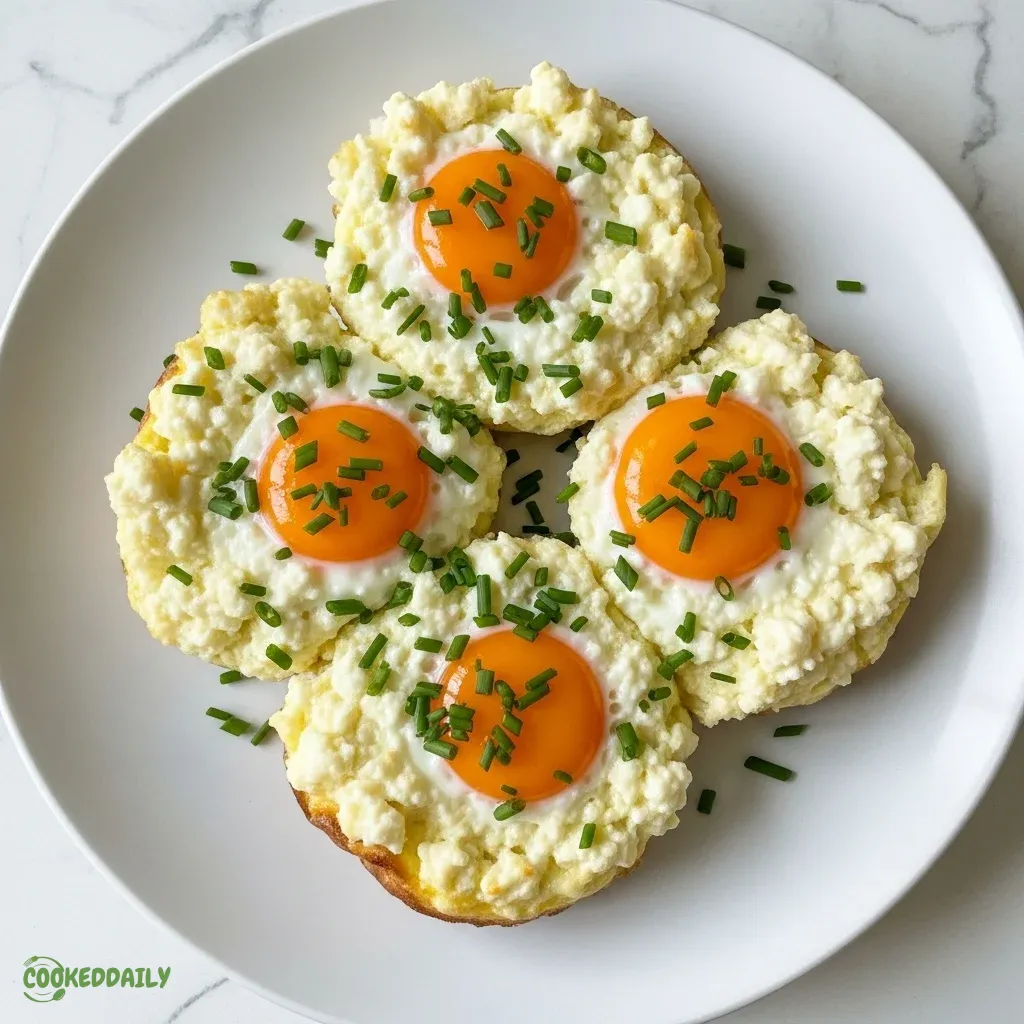
To turn Baked Cottage Cheese Eggs into a complete, chef-inspired meal, you need the right accompaniments. I prefer balancing the rich, creamy texture of the eggs with something crisp and acidic.
- Arugula Salad: Toss fresh arugula with cold-pressed Olive Oil and lemon juice. The peppery bite of the greens cuts through the richness of the Baked Cottage Cheese Eggs beautifully.
- Roasted Heirloom Tomatoes: Roast halved tomatoes with garlic and thyme until they are bursting with umami. The acidity provides a perfect counterpoint to the dairy.
- Avocado Toast: Serve your eggs over a slice of sprouted grain bread topped with smashed avocado and a squeeze of lime.
- Sautéed Asparagus: Briefly sear young asparagus spears in Avocado Oil until tender-crisp. The earthy flavor complements the eggs without overpowering them.
To turn Baked Cottage Cheese Eggs into a complete, chef-inspired meal, you need the right accompaniments. Try pairing it with a light and refreshing dish like Keto Baked Cod with Lemon to complement the richness of the eggs.
FAQs
Can I make Baked Cottage Cheese Eggs without a blender?
Yes, you certainly can. If you enjoy the texture of cottage cheese curds, simply whisk the ingredients together in a bowl. The Baked Cottage Cheese Eggs will have small pockets of melted cheese throughout, which many people find delightful. The blender is only necessary if you desire a perfectly smooth, custard-style finish.
Is this recipe suitable for a Keto diet?
Absolutely. Baked Cottage Cheese Eggs are naturally high in protein and healthy fats while remaining very low in carbohydrates. To keep it strictly Keto, ensure you are using full-fat cottage cheese and avoid adding any starchy vegetables or sugary sauces to the side. It is a staple for many low-carb enthusiasts.
Why did my eggs release a lot of liquid after baking?
This is usually the result of “syneresis,” which happens when the egg proteins cook too quickly and squeeze out the moisture. To prevent watery Baked Cottage Cheese Eggs, lower your oven temperature or use the water bath method mentioned in the Pro Tips. Also, ensure you are using a high-quality cottage cheese that doesn’t contain excessive liquid or whey.
Baked Cottage Cheese Eggs offer a unique blend of creamy cottage cheese and fluffy eggs, creating a dish that is both satisfying and nutritious. This combination taps into the broader trend of high-protein breakfasts and can be enhanced with a variety of ingredients, making it a versatile option for health-conscious eaters looking to improve their morning meals; see more about this trend in nutrition.
Nutrition Information (per serving)
This nutritional summary provides an estimate based on using pasture-raised eggs and 4% milk fat cottage cheese. These Baked Cottage Cheese Eggs are a powerhouse of nutrition, providing essential vitamins like B12 and minerals like selenium.
| Nutrient | Amount |
|---|---|
| Calories | 210 kcal |
| Total Protein | 18g |
| Total Fat | 14g |
| Saturated Fat | 5g |
| Total Carbohydrates | 3g |
| Sugar | 2g |
| Sodium | 380mg |
As you can see, Baked Cottage Cheese Eggs offer a balanced macro profile that supports an active lifestyle. By focusing on ingredient quality and precise cooking techniques, you turn a simple breakfast into a culinary masterpiece. Enjoy the process and the incredible flavor of these Baked Cottage Cheese Eggs!
Print
Baked Cottage Cheese Eggs
- Total Time: 45 mins
- Yield: 4 servings 1x
- Diet: Gluten Free
Description
Baked Cottage Cheese Eggs are a high-protein breakfast featuring a custard-like consistency created by blending cottage cheese with pasture-raised eggs. This gourmet dish remains healthy and versatile, perfect for breakfast or meal prep.
Ingredients
4 Pasture-Raised Eggs
1 cup Full-Fat Cottage Cheese (4% milk fat)
1 tablespoon Avocado Oil (for greasing)
2 tablespoons Fresh Chives, chopped
1 teaspoon Maldon Sea Salt
1/2 teaspoon Freshly Cracked Black Pepper
Optional: 1/4 teaspoon Smoked Paprika
Instructions
- Preheat your oven to 350°F (175°C) and grease a baking dish with avocado oil
- Blend the cottage cheese in a high-speed blender for 30 seconds to create a smooth liquid
- In a large bowl, whisk the eggs until emulsified and slowly add the blended cottage cheese while whisking
- Fold in chopped chives, sea salt, and black pepper, and any additional sautéed vegetables if desired
- Pour the mixture into the prepared dish and bake for 20 to 25 minutes until edges are set and center has a slight jiggle
- Allow to rest for 3 to 5 minutes before garnishing with more chives and serving
Notes
For a smoother texture, use a blender to blend the cottage cheese before adding it to the eggs.
Store leftovers in an airtight container in the refrigerator for up to four days.
- Prep Time: 20 mins
- Cook Time: 25 mins
- Category: Breakfast
- Method: Baking
- Cuisine: American
Nutrition
- Serving Size: 1 bowl
- Calories: 210 kcal
- Sugar: 2g
- Sodium: 380mg
- Fat: 14g
- Saturated Fat: 5g
- Unsaturated Fat: 9g
- Trans Fat: 0g
- Carbohydrates: 3g
- Fiber: 0g
- Protein: 18g
- Cholesterol: 245mg