

Imagine the concentrated essence of a sun-ripened mango, transformed into a chewy, vibrant snack that melts on your tongue with an explosion of tropical flavor. As a chef, I have always believed that nature provides the best candy, and this Sugar-Free Mango Fruit Leather is the ultimate proof. We are stripping away the artificial dyes, corn syrups, and preservatives found in store-bought versions to highlight the pure, unadulterated soul of the fruit.
By using the right techniques, we can achieve a flexible, glass-like texture that rivals any professional confectionary. This Sugar-Free Mango Fruit Leather is not just a snack; it is a culinary celebration of seasonal produce at its peak. Every bite delivers a balance of natural sweetness and bright acidity that will keep you coming back for more.
Why You’ll Love This Sugar-Free Mango Fruit Leather
- Intense Tropical Flavor: By dehydrating the mango puree, we concentrate the natural sugars and aromatics, creating a Sugar-Free Mango Fruit Leather that tastes more like a mango than the fruit itself.
- Clean Label Snacking: This recipe contains no refined sugars or hidden chemicals, making it the perfect nutrient-dense fuel for kids and athletes alike.
- Culinary Simplicity: You only need a few high-quality ingredients and a bit of patience to master this gourmet Sugar-Free Mango Fruit Leather.
- Versatile and Portable: These rolls are light, shelf-stable, and ideal for lunchboxes, hiking trips, or a quick energy boost during a busy workday.
Ingredients You’ll Need
In my kitchen, the quality of the ingredient dictates the quality of the dish. When preparing Sugar-Free Mango Fruit Leather, you must choose the right fruit. I recommend using Champagne (Ataulfo) mangoes for their buttery, fiber-free texture, or Kent mangoes for their deep sweetness.
Avoid stringy, fibrous varieties which can ruin the smoothness of your Sugar-Free Mango Fruit Leather. Here is what you need to gather for this professional-grade snack:
| Ingredient | Quantity | Chef’s Note |
|---|---|---|
| Fresh Ripe Mangoes | 4 Large (approx. 4 cups pureed) | Must be very soft to the touch for maximum natural sugar content. |
| Fresh Lime Juice | 1 Tablespoon | Acts as a natural preservative and brightens the flavor profile. |
| Raw Honey or Monk Fruit (Optional) | 1-2 Tablespoons | Only necessary if your mangoes are slightly under-ripe. |
| Fine Sea Salt | 1 Pinch | A tiny amount of salt enhances the perception of sweetness. |
Substitutions & Variations
Note: This video is for demonstration purposes and may use a slightly different method.
As a chef, I encourage you to use this Sugar-Free Mango Fruit Leather recipe as a canvas for your creativity. While the classic mango version is stunning, you can easily pivot based on what is in season or sitting in your fruit bowl.
If you want a Sugar-Free Mango Fruit Leather with a kick, consider adding a teaspoon of Tajin or a pinch of cayenne pepper before dehydrating. This creates a “Mango Chamoy” style snack that is incredibly popular in professional pastry circles.
For a creamier texture, you can blend in half a cup of full-fat coconut milk, though this will slightly change the drying time. If you find mangoes are out of season, frozen mango chunks work surprisingly well; just ensure they are fully thawed and drained of excess water before pureeing.
You can also create a “Sunburst” version of Sugar-Free Mango Fruit Leather by swirling in some raspberry or strawberry puree to create a beautiful marbled effect that looks as good as it tastes. Remember, the goal is to maintain the integrity of the fruit while exploring complementary flavor profiles.
As you experiment with this Sugar-Free Mango Fruit Leather recipe, consider enhancing it further by trying the tempting Sugar-Free Ninja Creami Strawberry Ice Cream for a refreshing dessert pairing.
Step-by-Step Instructions
- Prepare the Fruit: Peel the mangoes and slice the flesh away from the large central pit. Place the golden fruit chunks into a high-powered blender. If you notice any fibers, you are using the wrong variety, but don’t worry—we can fix that by passing the final puree through a fine-mesh sieve.
- Achieve the Perfect Puree: Add the lime juice and a tiny pinch of sea salt to the blender. Process on high speed until the mixture is absolutely silky. For a professional-grade Sugar-Free Mango Fruit Leather, the texture must be completely uniform without any lumps or chunks.
- The Taste Test: This is the most important step for any chef. Taste your puree. If it lacks a “pop,” add another squeeze of lime. If it isn’t sweet enough for your palate, stir in a touch of monk fruit or raw honey. Remember, the flavor will intensify as it dries, so don’t over-sweeten.
- Prepare the Trays: Preheat your oven to its lowest possible setting (usually 140°F to 170°F) or set your dehydrator to 135°F. Line a large rimmed baking sheet with a high-quality silicone mat or parchment paper. Never use foil, as the Sugar-Free Mango Fruit Leather will stick to it permanently.
- Spread with Precision: Pour the mango mixture onto the prepared sheet. Using an offset spatula, spread the puree into a thin, even rectangle. Chef’s Tip: Ensure the edges are slightly thicker than the center. The edges dry faster and tend to get brittle; making them thicker ensures the entire sheet of Sugar-Free Mango Fruit Leather dries at the same rate.
- The Slow Dehydration: Place the tray in the oven. This process requires patience. It typically takes anywhere from 4 to 8 hours depending on your oven’s humidity and the thickness of the puree. The Sugar-Free Mango Fruit Leather is done when the surface is no longer tacky to the touch but still remains flexible.
- Cooling and Cutting: Remove the tray from the oven and let it cool completely at room temperature. Peel the leather off the silicone mat. Use clean kitchen shears or a pizza cutter to slice the Sugar-Free Mango Fruit Leather into long strips. Roll them up in strips of parchment paper for that classic look.
Pro Tips for Success
To achieve that translucent, flexible finish that defines a high-quality Sugar-Free Mango Fruit Leather, you must master the art of temperature control. If your oven temperature is too high, you aren’t dehydrating; you are baking. This will cause the fruit to brown and lose its vibrant orange hue. If your oven doesn’t go below 170°F, prop the door open slightly with a wooden spoon to allow moisture to escape and keep the internal temperature lower.
Another technical secret involves the thickness of the spread. Aim for about 1/8th of an inch. If it is too thin, you will end up with mango chips (which are delicious but not “leather”).
If it is too thick, the middle will stay jammy while the outside gets tough. Consistency is the hallmark of a professional chef, and it is the key to perfect Sugar-Free Mango Fruit Leather. Finally, always use a silicone baking mat if possible. It provides the smoothest surface and makes peeling the Sugar-Free Mango Fruit Leather an effortless task.
Temperature control is key to perfection, just like it is in making High-Protein Sugar-Free Banana Bread, where mastering the heat produces delicious results.
Storage & Reheating Tips
While you don’t “reheat” fruit leather in the traditional sense, environmental factors like humidity can change its texture over time. Store your Sugar-Free Mango Fruit Leather in an airtight glass jar or a vacuum-sealed bag. If you live in a dry climate, it will stay perfect at room temperature for up to two weeks. In more humid environments, I recommend storing your Sugar-Free Mango Fruit Leather in the refrigerator to prevent it from becoming overly sticky.
If your Sugar-Free Mango Fruit Leather has sat for too long and become a bit too stiff, you can actually “revive” it. Simply place it in a container with a slightly damp paper towel for an hour. The leather will absorb just enough moisture to become pliable again.
For long-term storage, this Sugar-Free Mango Fruit Leather freezes beautifully. Just place the rolls in a freezer-safe bag, and they will last for up to six months, though I doubt they will last that long once you taste them!
What to Serve With This Recipe
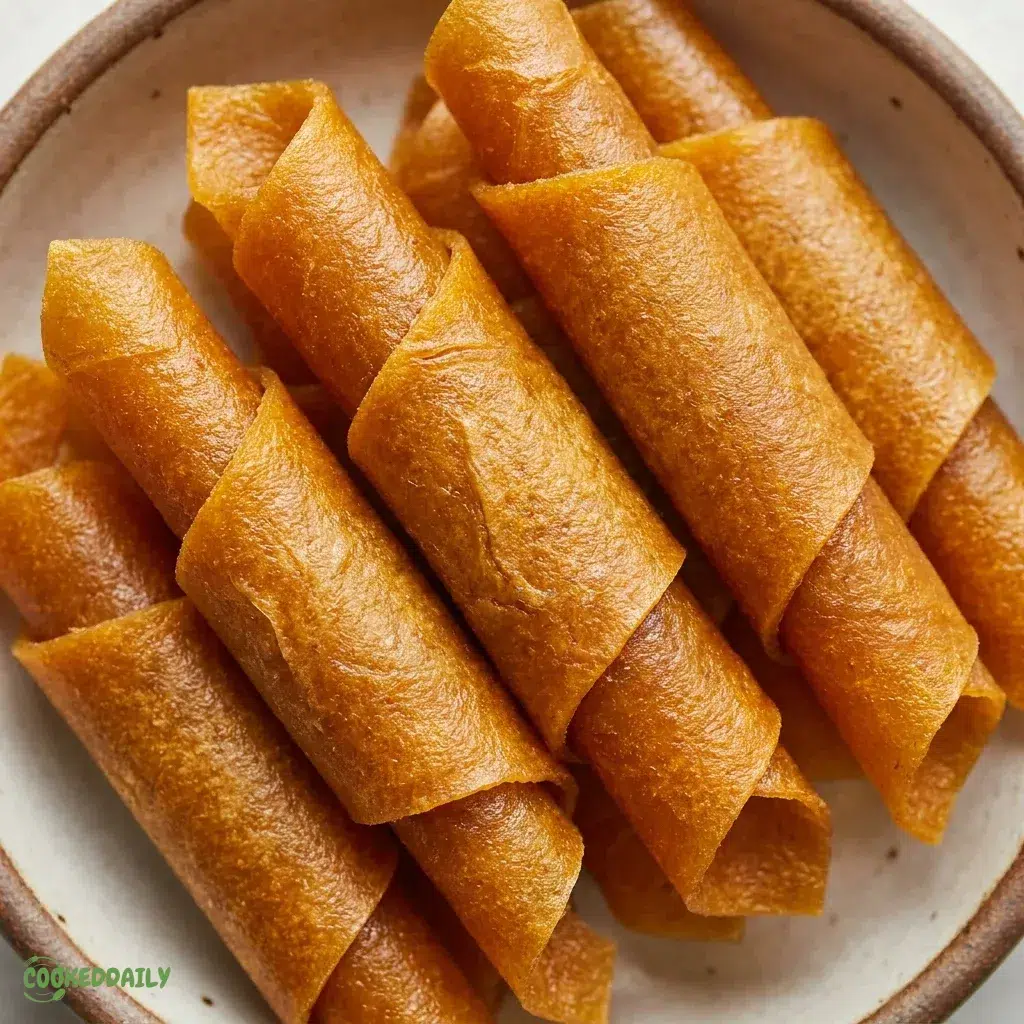
While Sugar-Free Mango Fruit Leather is a standalone star, it also works as a sophisticated component in a larger culinary spread. I love to serve these vibrant rolls on a healthy charcuterie board alongside raw almonds, walnuts, and a selection of sharp goat cheeses. The sweetness of the mango cuts through the richness of the cheese beautifully. It is a modern, chef-driven take on the classic fruit and cheese pairing.
You can also chop the Sugar-Free Mango Fruit Leather into small bits and use it as a “jewelry” garnish for a Greek yogurt parfait or a chia seed pudding. It adds a chewy texture that fresh fruit cannot provide. For a refreshing summer salad, try slivering the leather and tossing it with arugula, avocado, and a lime-olive oil vinaigrette. The concentrated mango flavor provides a surprising burst of sweetness in every bite, elevating a simple salad into something extraordinary.
To elevate your culinary spread, enjoy Sugar-Free Mango Fruit Leather alongside Sugar-Free Strawberry Lemonade Popsicles, combining sweet and savory for an unforgettable snack experience.
FAQs
How do I know when the Sugar-Free Mango Fruit Leather is perfectly done?
The “touch test” is your best friend here. Gently press the center of the sheet with your finger. It should feel firm and smooth, not sticky or wet.
If your finger leaves an indentation or comes away with orange residue, it needs more time. The Sugar-Free Mango Fruit Leather should peel away from the parchment easily in one solid piece without tearing.
Can I make this recipe without an oven or dehydrator?
Technically, you can sun-dry Sugar-Free Mango Fruit Leather if you live in an extremely hot, dry climate with low humidity. However, this is difficult to control and exposes the food to insects and dust. For the best results and food safety, stick to the low-and-slow oven method or a dedicated dehydrator. It ensures a consistent Sugar-Free Mango Fruit Leather every time.
Is this Sugar-Free Mango Fruit Leather suitable for a Keto diet?
Mangoes are naturally higher in carbohydrates and fructose than berries. While this Sugar-Free Mango Fruit Leather contains no added refined sugars, it is not strictly “low carb.” However, because the flavor is so concentrated, a small strip can satisfy a sweet craving with far fewer carbs than a traditional dessert. If you are strictly Keto, enjoy this Sugar-Free Mango Fruit Leather in moderation as a special treat.
Sugar-Free Mango Fruit Leather is a delightful snack made from dehydrated mango puree, avoiding any artificial ingredients or added sugars. This reflects a broader trend towards clean eating and natural foods, allowing you to enjoy fruity flavors without the guilt, as seen in discussions about dried fruit.
Nutrition Information (per serving)
This nutritional profile assumes the recipe is divided into 8 generous rolls of Sugar-Free Mango Fruit Leather. Mangoes are an incredible source of Vitamin A and Vitamin C, which support immune health and skin glow. By keeping this snack sugar-free, we ensure a steady release of energy without the dreaded insulin spike associated with processed candies.
| Nutrient | Amount |
|---|---|
| Calories | 65 kcal |
| Total Carbohydrates | 16g |
| Dietary Fiber | 2g |
| Natural Sugars | 14g |
| Protein | 0.8g |
| Vitamin C | 45% DV |
There you have it—a chef’s guide to creating the perfect Sugar-Free Mango Fruit Leather. By focusing on the quality of your fruit and the precision of your technique, you have created a snack that is both sophisticated and wholesome. This Sugar-Free Mango Fruit Leather represents the pinnacle of healthy eating: vibrant, delicious, and completely satisfying. Go ahead, take a bite of sunshine!
Print
Sugar-Free Mango Fruit Leather
- Total Time: 500 mins
- Yield: 8 servings 1x
- Diet: Gluten Free
Description
Sugar-Free Mango Fruit Leather is a vibrant, chewy snack made from pureed mangoes, with no added sugars or preservatives. It's a concentrated essence of tropical flavor, perfect for healthy snacking.
Ingredients
4 Large Fresh Ripe Mangoes
1 Tablespoon Fresh Lime Juice
1–2 Tablespoons Raw Honey or Monk Fruit (Optional)
1 Pinch Fine Sea Salt
Instructions
- Peel the mangoes and slice the flesh away from the pit. Blend the mango chunks in a high-powered blender
- Add lime juice and a pinch of sea salt; blend until silky and smooth
- Taste the puree and adjust sweetness with honey or monk fruit if necessary
- Preheat oven to 140°F to 170°F or set dehydrator to 135°F. Line a baking sheet with a silicone mat
- Spread the mango mixture onto the mat in a thin, even layer
- Dehydrate for 4 to 8 hours until no longer tacky but still flexible
- Let cool, peel off the mat, and slice into strips
- Roll the mango leather in parchment paper for storage
Notes
Use Champagne or Kent mangoes for best texture and flavor.
Store in an airtight container; can last up to 2 weeks at room temperature or longer in the fridge.
- Prep Time: 20 mins
- Cook Time: 480 mins
- Category: Snack
- Method: Dehydrating
- Cuisine: American
Nutrition
- Serving Size: 1 roll
- Calories: 65 kcal
- Sugar: 14g
- Sodium: 1mg
- Fat: 0.2g
- Saturated Fat: 0g
- Unsaturated Fat: 0g
- Trans Fat: 0g
- Carbohydrates: 16g
- Fiber: 2g
- Protein: 0.8g
- Cholesterol: 0mg