

Achieving a masterpiece in the kitchen requires more than just following a list of instructions; it requires an understanding of how heat transforms simple earth-bound ingredients into something extraordinary.
This Vegan Roasted Vegetable Casserole represents the pinnacle of plant-based comfort food, blending deep, caramelized flavors with a satisfying, hearty texture. As a chef, I always look for ways to maximize the natural sugars in vegetables through high-heat roasting, creating a depth of flavor that many think is only possible with meat.
You will find that this Vegan Roasted Vegetable Casserole is not just a side dish, but a vibrant, nutrient-dense centerpiece that commands attention at any dinner table. The secret lies in the contrast between the tender interiors of the squash and the crisp, golden edges of the roasted brassicas.
Every bite delivers a symphony of garden-fresh notes balanced by a rich, savory glaze. This Vegan Roasted Vegetable Casserole proves that when you treat vegetables with respect, they reward you with incredible complexity.
Why You’ll Love This Vegan Roasted Vegetable Casserole
- Unmatched Depth of Flavor: By utilizing the Maillard reaction through precise roasting, this Vegan Roasted Vegetable Casserole offers a smoky, sweet, and savory profile that surpasses traditional steamed vegetable dishes.
- Nutrient-Dense and Anti-Inflammatory: We swap out processed fats for heart-healthy olive oil and incorporate a rainbow of vegetables, ensuring every serving of this Vegan Roasted Vegetable Casserole supports your well-being.
- Incredible Versatility: Whether you are hosting a formal holiday gathering or prepping meals for a busy week, this Vegan Roasted Vegetable Casserole adapts perfectly to any occasion and pairs beautifully with various proteins.
- Professional Texture: Forget about mushy vegetables; our specific layering and roasting technique ensures that this Vegan Roasted Vegetable Casserole maintains a delightful structural integrity and a satisfying mouthfeel.
Ingredients You’ll Need
Quality is the cornerstone of great cooking. When selecting ingredients for your Vegan Roasted Vegetable Casserole, always prioritize organic, seasonal produce to ensure the highest sugar content and best texture. A chef knows that the dish is only as good as its components. Below are the essential elements required to build this stunning Vegan Roasted Vegetable Casserole.
- Butternut Squash: Seek out a firm, heavy squash; this provides the creamy, sweet foundation for your Vegan Roasted Vegetable Casserole.
- Brussels Sprouts: These little gems offer a nutty bitterness that balances the sweetness of the root vegetables.
- Red Onions: Roasting transforms these into jammy, sweet ribbons of flavor that permeate the entire Vegan Roasted Vegetable Casserole.
- Carrots and Parsnips: Use heirloom varieties if available to add a beautiful visual pop and earthy complexity.
- Extra Virgin Olive Oil: Avoid inflammatory seed oils; a high-quality, cold-pressed olive oil provides a rich mouthfeel and helps the vegetables caramelize perfectly.
- Fresh Rosemary and Thyme: Never use dried herbs when you can use fresh; the volatile oils in fresh herbs elevate the Vegan Roasted Vegetable Casserole to a restaurant-quality level.
- Garlic: Whole smashed cloves infuse the olive oil and the vegetables with a mellow, roasted pungency.
- Balsamic Glaze (Sugar-Free): A splash of high-quality balsamic vinegar adds the necessary acidity to brighten the heavy roasted notes.
- Sea Salt and Freshly Cracked Black Pepper: These are non-negotiable for highlighting the inherent flavors of every ingredient in the Vegan Roasted Vegetable Casserole.
Substitutions & Variations
Note: This video is for demonstration purposes and may use a slightly different method.
The beauty of the Vegan Roasted Vegetable Casserole lies in its adaptability. While the base recipe is spectacular, you can easily modify it based on what is growing in your garden or sitting in your pantry.
If you prefer a bit of heat, consider adding a pinch of red pepper flakes to the olive oil before tossing the vegetables. For those who want more protein, adding roasted chickpeas or smoked tofu cubes directly into the Vegan Roasted Vegetable Casserole during the last ten minutes of baking adds a wonderful textural contrast.
If you cannot find butternut squash, sweet potatoes or yams serve as excellent substitutes, offering a similar starchiness and sweetness. For a low-carb variation of the Vegan Roasted Vegetable Casserole, replace the root vegetables with cauliflower florets and radishes, which take on a surprisingly mellow flavor when roasted.
To add a “cheesy” element without using dairy or processed substitutes, sprinkle a generous amount of nutritional yeast over the Vegan Roasted Vegetable Casserole before the final bake. This adds a boost of B-vitamins and a savory umami punch that satisfies the palate.
For even more inspiration, you can create a vibrant vegan twist on a classic dish by trying our Vegan Spanish Potato Tortilla, which beautifully captures the same roasted flavors.
Step-by-Step Instructions
- Preheat and Prep: Begin by preheating your oven to 400°F (200°C). A hot oven is critical for achieving the necessary sear on the vegetables. Line a large baking sheet with parchment paper or a silicone mat.
- Uniform Cutting: Carefully dice the butternut squash, carrots, and parsnips into uniform 1-inch cubes. Slice the Brussels sprouts in half and quarter the red onions. Uniformity ensures that every piece in your Vegan Roasted Vegetable Casserole cooks at the same rate.
- The Flavor Infusion: In a large mixing bowl, combine the vegetables with a generous drizzle of olive oil. Add the smashed garlic, chopped rosemary, and thyme. Toss thoroughly until every piece is glistening. Season aggressively with sea salt and black pepper.
- The First Roast: Spread the vegetables in a single layer on the prepared baking sheet. Do not crowd the pan; if the vegetables are too close, they will steam rather than roast. Roast for 25 to 30 minutes, tossing halfway through, until they begin to brown and soften.
- Assemble the Casserole: Transfer the partially roasted vegetables into a ceramic or glass baking dish. This transition is what turns a simple roasted tray into a cohesive Vegan Roasted Vegetable Casserole.
- The Final Bake: Drizzle a small amount of balsamic vinegar over the top and place the dish back in the oven for another 15 minutes. This allows the flavors to meld together and the balsamic to reduce into a sticky, savory glaze.
- Garnish and Serve: Remove the Vegan Roasted Vegetable Casserole from the oven. Let it rest for five minutes to allow the juices to settle. Garnish with fresh parsley or toasted pumpkin seeds for an extra layer of texture.
Pro Tips for Success
To truly master the Vegan Roasted Vegetable Casserole, you must pay attention to moisture control. One of the most common mistakes home cooks make is using “wet” vegetables. Ensure your vegetables are completely dry after washing before you add the olive oil. Moisture on the surface creates steam, which prevents the Maillard reaction from occurring, resulting in a soggy Vegan Roasted Vegetable Casserole instead of a crispy one.
Chef’s Tip: For an incredible flavor explosion, “bloom” your dried spices or woody herbs in the olive oil over low heat for two minutes before tossing them with the vegetables.
This process releases the fat-soluble compounds in the herbs, ensuring the flavor of your Vegan Roasted Vegetable Casserole is deeply infused rather than just sitting on the surface. Furthermore, always use a heavy-bottomed ceramic dish for the final bake, as it retains heat more evenly, providing a perfect crust on the bottom of your casserole.
Master the art of texture in your dishes by learning the secrets of our Vegan Tofu Omelette, ensuring your casserole remains perfectly crispy and delicious.
Storage & Reheating Tips
This Vegan Roasted Vegetable Casserole stores beautifully, making it an ideal candidate for meal prep. Place leftovers in an airtight glass container and refrigerate for up to four days. The flavors often deepen overnight as the herbs continue to infuse the roasted vegetables. However, I do not recommend freezing this Vegan Roasted Vegetable Casserole, as the cellular structure of the vegetables—particularly the squash and onions—will break down upon thawing, leading to a mushy texture.
When reheating, avoid the microwave if possible. The microwave tends to make the vegetables rubbery. Instead, place the Vegan Roasted Vegetable Casserole in an oven-safe dish, cover it with foil to prevent drying, and warm it at 350°F (175°C) for about 10-15 minutes.
For a “like-new” finish, remove the foil for the last three minutes to crisp up the edges again. If you are in a rush, a quick sear in a cast-iron skillet with a drop of olive oil also works wonders to revive the textures of the Vegan Roasted Vegetable Casserole.
What to Serve With This Recipe
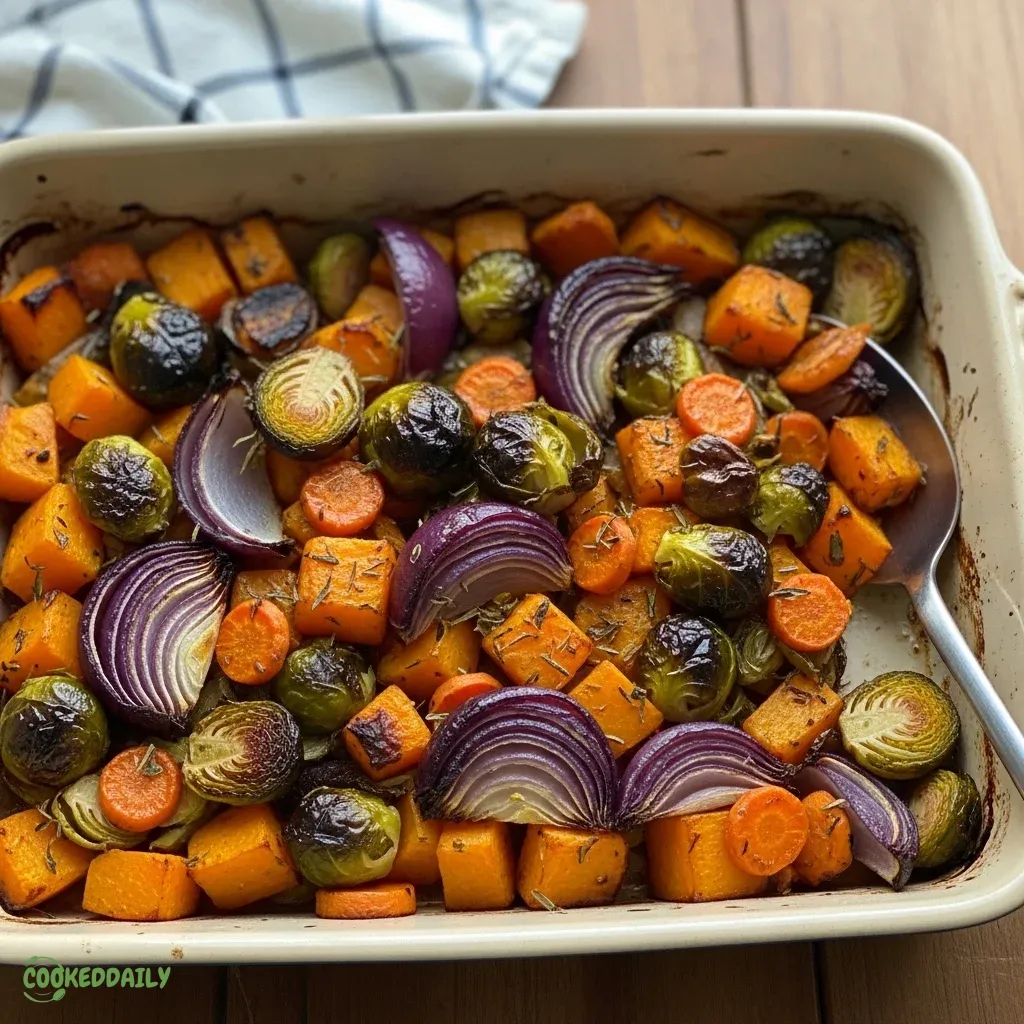
While this Vegan Roasted Vegetable Casserole is hearty enough to stand alone, pairing it with the right side dishes can create a truly balanced meal. I recommend serving it alongside a bright, acidic salad to cut through the richness of the roasted vegetables. A simple arugula salad with a lemon-tahini dressing provides the perfect peppery contrast. The acidity of the lemon elevates the sweetness of the Vegan Roasted Vegetable Casserole beautifully.
For those looking to increase their protein intake, a side of quinoa or wild rice pilaf is an excellent choice. The nutty flavor of wild rice complements the earthy tones of the parsnips and carrots in the Vegan Roasted Vegetable Casserole. You might also consider serving it with a dollop of homemade cashew cream or a side of steamed kale seasoned with garlic and olive oil. These additions ensure your meal is both nutritionally complete and culinarily sophisticated.
To elevate your dining experience, consider pairing this casserole with a soothing bowl of Vegan Zuppa Toscana, complementing the rich flavors of your roasted vegetables.
FAQs
Can I make this Vegan Roasted Vegetable Casserole ahead of time?
Yes, you can certainly prepare the components of the Vegan Roasted Vegetable Casserole in advance. You may chop the vegetables a day early and keep them in airtight bags in the fridge. You can even perform the initial roast up to 24 hours ahead. When you are ready to serve, simply assemble the casserole, add the glaze, and perform the final bake to bring everything to the perfect temperature and texture.
Is this Vegan Roasted Vegetable Casserole suitable for a Keto diet?
While this Vegan Roasted Vegetable Casserole is incredibly healthy, it does contain root vegetables like carrots and parsnips which are higher in carbohydrates. To make this dish keto-friendly, you would need to substitute the squash and parsnips with lower-carb options such as zucchini, bell peppers, and cauliflower. The cooking method remains the same, but the vegetable selection would shift toward non-starchy options.
How do I prevent the garlic from burning in the casserole?
Garlic can become bitter if it burns during the high-heat roasting process. To prevent this in your Vegan Roasted Vegetable Casserole, I recommend leaving the garlic cloves whole and slightly smashed with the skin removed, or adding minced garlic only during the final 15 minutes of baking. This ensures you get the sweet, aromatic flavor of the garlic without the acrid taste of burnt bits.
Vegan Roasted Vegetable Casserole exemplifies how plant-based cuisine can transform simple ingredients into a hearty main dish that’s both nutritious and satisfying. The technique of high-heat roasting not only intensifies the flavors of the vegetables but also brings out their natural sweetness, making it a delightful addition to any meal, as discussed in the context of roasting techniques.
Nutrition Information (per serving)
This Vegan Roasted Vegetable Casserole is as nutritious as it is delicious. It is packed with fiber, vitamins A and C, and healthy fats. Below is the estimated macronutrient breakdown per serving, assuming the recipe serves six people.
| Nutrient | Amount per Serving |
|---|---|
| Calories | 210 kcal |
| Total Fat | 9g |
| Saturated Fat | 1.5g |
| Sodium | 150mg |
| Total Carbohydrates | 28g |
| Dietary Fiber | 7g |
| Sugars | 6g (Natural) |
| Protein | 4g |
In conclusion, this Vegan Roasted Vegetable Casserole is a testament to the fact that healthy eating can be a luxurious experience. By focusing on high-quality olive oil, fresh herbs, and proper roasting techniques, you transform humble produce into a gourmet delight.
Whether you are a seasoned chef or a home cook looking to impress, this Vegan Roasted Vegetable Casserole will surely become a staple in your culinary repertoire. Enjoy the process of cooking, taste as you go, and always prioritize the quality of your ingredients.
Print
Vegan Roasted Vegetable Casserole
- Total Time: 60 mins
- Yield: 6 servings 1x
- Diet: Gluten Free
Description
This Vegan Roasted Vegetable Casserole is a nutrient-dense centerpiece that blends deep, caramelized flavors with a satisfying, hearty texture. It features a range of vibrant vegetables roasted to perfection, enhanced with fresh herbs and a balsamic glaze, proving that plant-based meals can be incredibly satisfying.
Ingredients
1 unit Butternut Squash
1 pound Brussels Sprouts
2 units Red Onions
2 units Carrots
2 units Parsnips
1/4 cup Extra Virgin Olive Oil
2 sprigs Fresh Rosemary
2 sprigs Fresh Thyme
4 cloves Garlic
2 tablespoons Balsamic Glaze
Sea Salt
Freshly Cracked Black Pepper
Instructions
- Preheat your oven to 400°F (200°C) and line a large baking sheet with parchment paper
- Dice the butternut squash, carrots, and parsnips into uniform 1-inch cubes, slice Brussels sprouts in half, and quarter red onions
- In a large mixing bowl, combine the vegetables with olive oil, smashed garlic, chopped rosemary, and thyme, then season with salt and pepper
- Spread the vegetables in a single layer on the baking sheet and roast for 25 to 30 minutes, tossing halfway through
- Transfer the partially roasted vegetables into a baking dish and drizzle with balsamic vinegar, then bake for another 15 minutes
- Remove from the oven, let it rest for five minutes, and garnish with fresh parsley or toasted pumpkin seeds before serving
Notes
For an added 'cheesy' flavor, sprinkle nutritional yeast over the casserole before the final bake.
Avoid using wet vegetables to prevent steaming instead of roasting.
- Prep Time: 20 mins
- Cook Time: 40 mins
- Category: Dinner
- Method: Baking
- Cuisine: American
Nutrition
- Serving Size: 1 bowl
- Calories: 210 kcal
- Sugar: 6g
- Sodium: 150mg
- Fat: 9g
- Saturated Fat: 1.5g
- Unsaturated Fat: 7.5g
- Trans Fat: 0g
- Carbohydrates: 28g
- Fiber: 7g
- Protein: 4g
- Cholesterol: 0mg