

Welcome to a bowl of pure, restorative comfort that nourishes your body from the inside out. This Vegan Vegetable Minestrone serves as a perfect example of how plants provide everything we need for vitality and strength. As a nutritionist, I often recommend this dish because it balances complex carbohydrates, plant-based proteins, and an array of essential phytonutrients.
You will find the textures incredibly satisfying, ranging from tender zucchini to hearty kidney beans, all swimming in a rich, herb-infused tomato broth. This recipe avoids the heavy fats and processed additives found in canned versions, offering you a “clean” and vibrant alternative. Prepare to experience a meal that stabilizes your blood sugar and supports your digestive health with every spoonful. Ultimately, this Vegan Vegetable Minestrone is more than just a soup; it is a therapeutic ritual for your well-being.
Why You’ll Love This Vegan Vegetable Minestrone
- Nutrient Density: Every ingredient provides a specific health benefit, from the lycopene in cooked tomatoes to the high fiber content in legumes.
- Easy One-Pot Cleanup: You can prepare this entire Vegan Vegetable Minestrone in a single large pot, making it perfect for busy weeknights.
- Customizable and Seasonal: This recipe adapts easily to whatever fresh produce you have in your refrigerator or garden.
- Heart-Healthy Profile: By using extra virgin olive oil and omitting animal fats, you support cardiovascular health while enjoying a rich flavor.
Ingredients You’ll Need
Selecting high-quality ingredients transforms a simple soup into a medicinal powerhouse. I recommend choosing organic vegetables whenever possible to reduce pesticide exposure. For this Vegan Vegetable Minestrone, we focus on whole foods that provide satiety and energy.
We use extra virgin olive oil as our primary fat because it contains oleic acid, which fights inflammation. Additionally, the inclusion of beans ensures you receive a steady dose of plant-based protein and minerals like iron and magnesium.
| Ingredient Category | Specific Items | Quantity |
|---|---|---|
| Healthy Fats | Extra Virgin Olive Oil | 2 tablespoons |
| Aromatics | Yellow Onion, Carrots, Celery, Garlic | 1 cup each (minced garlic: 4 cloves) |
| Base Vegetables | Zucchini, Green Beans, Spinach | 1 cup each (chopped) |
| Proteins & Legumes | Canned Cannellini Beans, Kidney Beans | 1 can (15oz) each, rinsed |
| Liquids & Tomatoes | Low-Sodium Vegetable Broth, Diced Tomatoes | 6 cups broth, 1 can (28oz) tomatoes |
| Grains | Small Pasta (Ditalini or Shells) | 1 cup (dry) |
| Herbs & Spices | Dried Oregano, Basil, Thyme, Bay Leaf | 1 teaspoon each |
Substitutions & Variations
Note: This video is for demonstration purposes and may use a slightly different method.
If you have specific dietary requirements, you can easily modify this Vegan Vegetable Minestrone without compromising its nutritional integrity. For those following a gluten-free diet, simply swap the traditional pasta for a brown rice or chickpea-based pasta. If you prefer a lower-carb option, replace the pasta with extra zucchini or even riced cauliflower. To increase the protein content further, you might consider adding organic diced tofu or a handful of quinoa during the simmering stage.
Furthermore, seasonal variations keep this recipe exciting throughout the year. In the winter months, you can use butternut squash or kale instead of zucchini and spinach. During the summer, fresh heirloom tomatoes and yellow summer squash make the Vegan Vegetable Minestrone feel light and refreshing.
Always remember to use “clean” ingredients, avoiding pre-packaged seasoning mixes that contain hidden sugars or artificial anti-caking agents. Instead, rely on high-quality sea salt and cracked black pepper to enhance the natural flavors of the produce.
For an exciting and protein-rich addition to your meal, consider trying a Vegan Chickpea Wrap. This delightful dish complements the flavors of the minestrone and provides an easy way to boost your dietary intake with plant-based proteins, just like your hearty soup does. Vegan Chickpea Wrap
Step-by-Step Instructions
Follow these steps carefully to ensure the flavors develop deeply and the vegetables maintain their structural integrity. Cooking is an art, but it is also a science of preserving nutrients. By sautéing the aromatics gently, you release their sulfur compounds, which support liver detoxification. Simmering the Vegan Vegetable Minestrone on a medium-low heat ensures that the vitamins remain intact rather than being destroyed by excessive heat.
- Sauté the Aromatics: Heat the extra virgin olive oil in a large pot over medium heat. Add the chopped onion, carrots, and celery. Cook for about 6 to 8 minutes until the vegetables soften and the onions become translucent.
- Add Garlic and Herbs: Stir in the minced garlic, dried oregano, basil, and thyme. Sauté for another 1 to 2 minutes until fragrant. This step creates the aromatic foundation of your Vegan Vegetable Minestrone.
- Deglaze and Add Base: Pour in the diced tomatoes (including the juice) and the vegetable broth. Add the bay leaf and stir well to combine all ingredients.
- Simmer the Hearty Veggies: Add the chopped green beans and the rinsed kidney and cannellini beans. Bring the mixture to a gentle boil, then reduce the heat and simmer for 15 minutes.
- Cook the Pasta: Add the small pasta and the chopped zucchini to the pot. Continue to simmer for about 8 to 10 minutes, or until the pasta is al dente and the zucchini is tender.
- Incorporate the Greens: During the last 2 minutes of cooking, stir in the fresh spinach. The residual heat will wilt the leaves perfectly without overcooking them, preserving their delicate folate content.
- Season and Serve: Remove the bay leaf. Season your Vegan Vegetable Minestrone with sea salt and black pepper to taste. Ladle into bowls and enjoy immediately while hot.
Pro Tips for Success
To achieve the best results with your Vegan Vegetable Minestrone, focus on the size of your vegetable cuts. Ensuring that all vegetables are chopped into uniform, bite-sized pieces allows them to cook evenly. If you find your soup is too thick, simply add an extra splash of broth or water to reach your desired consistency.
However, be careful not to overcook the pasta. Pasta continues to absorb liquid as it sits, so aim for a firm texture during the initial cooking phase.
Another professional tip involves the use of “acid” to brighten the flavors. A small squeeze of fresh lemon juice or a teaspoon of apple cider vinegar added just before serving can transform the dish. This acidity cuts through the earthiness of the beans and enhances the sweetness of the carrots.
Moreover, if you want a deeper “umami” flavor without using cheese, stir in a tablespoon of nutritional yeast. This addition provides a savory depth and a boost of B-vitamins to your Vegan Vegetable Minestrone.
To enhance your cooking skills, take note of the importance of uniform vegetable cuts, which can be further practiced in making Vegan Lentil Meatballs. Not only will this help you achieve the perfect soup, but the meatballs can also serve as a fantastic side dish alongside your minestrone. Vegan Lentil Meatballs
Storage & Reheating Tips
This Vegan Vegetable Minestrone tastes even better the next day as the flavors have more time to meld. Store your leftovers in an airtight glass container in the refrigerator for up to 4 to 5 days. Glass is preferable to plastic because it does not leach chemicals into your warm soup.
When you are ready to eat, reheat the soup on the stovetop over medium heat. Avoid using the microwave if possible to maintain the textural quality of the vegetables.
If you plan to freeze the soup, I suggest doing so before adding the pasta. Pasta can become mushy after thawing and reheating. Simply freeze the vegetable and bean base, then boil fresh pasta to add when you are ready to serve.
This Vegan Vegetable Minestrone stays fresh in the freezer for up to 3 months. Always leave an inch of space at the top of your container to allow for expansion during the freezing process.
What to Serve With This Recipe
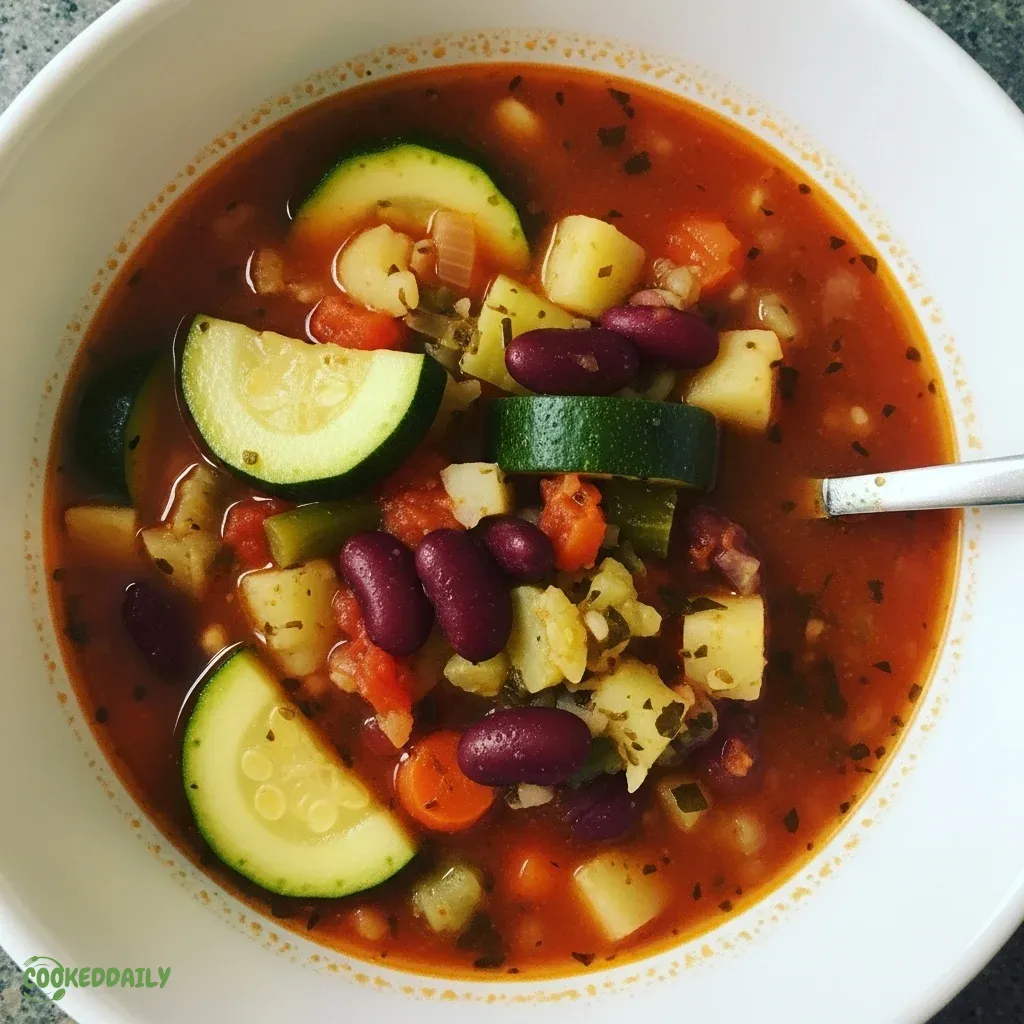
Pairing this Vegan Vegetable Minestrone with the right side dishes can turn a light lunch into a complete, balanced feast. I recommend a side of toasted sourdough bread drizzled with a little more olive oil. Sourdough undergoes a fermentation process that makes it easier to digest and provides a lower glycemic index compared to standard white bread. The crunch of the toast perfectly complements the soft textures of the soup.
Additionally, a fresh arugula or kale salad makes an excellent companion. Toss the greens in a simple vinaigrette of lemon juice and flaxseed oil to add healthy omega-3 fatty acids to your meal. You could also serve the Vegan Vegetable Minestrone alongside roasted cruciferous vegetables, such as broccoli or Brussels sprouts, to increase your intake of cancer-fighting compounds. These combinations ensure you receive a wide spectrum of nutrients in one sitting.
If you’re looking for the perfect side to elevate your Vegan Vegetable Minestrone, consider serving it with a delicious Vegan Mushroom Pasta. The earthy flavors of the mushrooms pair beautifully with the fresh ingredients of your soup, creating a well-rounded meal experience. Vegan Mushroom Pasta
FAQs
Can I make Vegan Vegetable Minestrone in a slow cooker?
Yes, you can certainly use a slow cooker for this recipe. Simply add all ingredients except for the pasta, zucchini, and spinach into the slow cooker and cook on low for 6 to 8 hours. Add the pasta and zucchini during the last 30 minutes of cooking, and stir in the spinach just before serving. This method allows the Vegan Vegetable Minestrone to develop a very rich flavor profile with minimal effort.
How can I increase the protein in this soup?
To boost the protein in your Vegan Vegetable Minestrone, you can add extra beans or even some cooked lentils. Another excellent option involves using a pasta made from lentils or chickpeas instead of wheat. These swaps can significantly increase the amino acid profile of the dish. Furthermore, sprinkling hemp seeds on top before serving adds both protein and healthy fats without changing the flavor of the soup.
Is this recipe suitable for weight management?
Absolutely. This Vegan Vegetable Minestrone is low in calorie density but high in nutrient density. The high fiber content from the vegetables and beans promotes a feeling of fullness, which prevents overeating.
Because it contains no refined sugars and utilizes healthy fats in moderation, it supports a metabolic environment conducive to maintaining a healthy weight. It is a “clean” fuel source that provides long-lasting energy.
Vegan Vegetable Minestrone is not just a delicious meal; it also encompasses a variety of health benefits characteristic of plant-based cuisines. The harmonious blend of vegetables and legumes in minestrone supports overall health and wellness, making it a popular choice among health-conscious individuals. Learn more about nutritious soups like this one on this page.
Nutrition Information (per serving)
The following nutritional data reflects a generous serving of Vegan Vegetable Minestrone. Please note that values may vary slightly based on the specific brands of broth or pasta you choose. This meal is naturally cholesterol-free and packed with dietary fiber, making it an excellent choice for a health-conscious lifestyle.
| Nutrient | Amount per Serving |
|---|---|
| Calories | 285 kcal |
| Total Fat | 6g |
| Saturated Fat | 1g |
| Protein | 12g |
| Total Carbohydrates | 48g |
| Dietary Fiber | 11g |
| Sugars | 5g (natural from veggies) |
| Sodium | 520mg |
In conclusion, this Vegan Vegetable Minestrone stands as a testament to the power of plant-based eating. By choosing whole, unprocessed ingredients, you provide your body with the tools it needs to repair and thrive. I hope this recipe becomes a staple in your kitchen, offering warmth and health to you and your loved ones. Remember, every bite is an opportunity to nourish your soul and protect your health.
Print
Vegan Vegetable Minestrone
- Total Time: 50 mins
- Yield: 4 servings 1x
- Diet: Vegan, Gluten Free (with substitutions)
Description
Vegan Vegetable Minestrone serves as a perfect example of how plants provide everything we need for vitality and strength. This dish balances complex carbohydrates, plant-based proteins, and an array of essential phytonutrients. The textures range from tender zucchini to hearty kidney beans, all swimming in a rich, herb-infused tomato broth.
Ingredients
2 tablespoons Extra Virgin Olive Oil
1 cup Yellow Onion (minced)
1 cup Carrots (minced)
1 cup Celery (minced)
4 cloves Garlic (minced)
1 cup Zucchini (chopped)
1 cup Green Beans (chopped)
1 cup Spinach (chopped)
1 can (15oz) Canned Cannellini Beans, rinsed
1 can (15oz) Kidney Beans, rinsed
6 cups Low-Sodium Vegetable Broth
1 can (28oz) Diced Tomatoes
1 cup Small Pasta (Ditalini or Shells, dry)
1 teaspoon Dried Oregano
1 teaspoon Dried Basil
1 teaspoon Dried Thyme
1 Bay Leaf
Instructions
- Heat the extra virgin olive oil in a large pot over medium heat. Add the chopped onion, carrots, and celery. Cook for about 6 to 8 minutes until the vegetables soften and the onions become translucent
- Stir in the minced garlic, dried oregano, basil, and thyme. Sauté for another 1 to 2 minutes until fragrant
- Pour in the diced tomatoes (including the juice) and vegetable broth. Add the bay leaf and stir well to combine all ingredients
- Add the chopped green beans and the rinsed kidney and cannellini beans. Bring to a gentle boil, then reduce heat and simmer for 15 minutes
- Add the small pasta and chopped zucchini to the pot. Continue to simmer for about 8 to 10 minutes, or until the pasta is al dente and the zucchini is tender
- During the last 2 minutes of cooking, stir in the fresh spinach. Remove the bay leaf and season with sea salt and black pepper to taste. Ladle into bowls and enjoy immediately
Notes
For a gluten-free version, substitute the pasta with brown rice or chickpea-based pasta.
To increase protein, consider adding diced tofu or quinoa.
- Prep Time: 20 mins
- Cook Time: 30 mins
- Category: Dinner
- Method: Stovetop
- Cuisine: Italian
Nutrition
- Serving Size: 1 bowl
- Calories: 285 kcal
- Sugar: 5g
- Sodium: 520mg
- Fat: 6g
- Saturated Fat: 1g
- Unsaturated Fat: 5g
- Trans Fat: 0g
- Carbohydrates: 48g
- Fiber: 11g
- Protein: 12g
- Cholesterol: 0mg