

There is something truly magical about a big, steaming bowl of Vegetarian Chickpea Pasta sitting in the middle of the dining table, ready to be shared. In my kitchen, this dish represents more than just a quick dinner; it is a way to slow down and connect with the people I love most. This recipe combines the earthy heartiness of chickpeas with perfectly al dente pasta, all tossed in a vibrant, herb-infused sauce that feels like a warm hug.
Whether you are hosting a lively neighborhood gathering or settling in for a quiet Tuesday night with the kids, this meal brings a sense of comfort and joy to any occasion. You will adore the way the creamy chickpeas nestle into the pasta shapes, creating a satisfying texture that even the pickiest eaters will enjoy. It is a wholesome, plant-powered feast that proves you do not need meat to create a deeply flavorful and filling centerpiece for your family meal.
Why You Will Love This Vegetarian Chickpea Pasta
- Incredible Texture: The combination of tender pasta and slightly nutty chickpeas creates a multi-layered mouthfeel that satisfies every craving.
- Family-Friendly and Adaptable: This Vegetarian Chickpea Pasta is a total crowd-pleaser that you can easily customize with whatever seasonal vegetables you have in your crisper drawer.
- Nutrient-Dense Fuel: Packed with plant-based protein and fiber, this meal keeps everyone energized and full without the heaviness of traditional cream sauces.
- Pantry-Staple Perfection: You likely already have most of these ingredients in your kitchen, making it the ultimate stress-free solution for busy weeknights.
Ingredients You Will Need
I always tell my friends that the secret to a spectacular Vegetarian Chickpea Pasta lies in the quality of your base ingredients. Since we are keeping things simple, each component really has a chance to shine. I prefer using a robust, cold-pressed olive oil to provide a rich foundation, and I always reach for organic chickpeas to ensure the best flavor.
If you want to boost the nutritional profile even further, you can use a pasta variety made from lentils or chickpeas, though traditional durum wheat or gluten-free brown rice pasta works beautifully here too. Here is everything you will need to gather on your counter before we start cooking.
| Ingredient | Quantity | Notes |
|---|---|---|
| Pasta (Penne, Fusilli, or Rigatoni) | 16 oz | Choose a shape that catches the sauce. |
| Cooked Chickpeas (Garbanzo Beans) | 2 cans (15 oz each) | Rinsed and drained thoroughly. |
| Extra Virgin Olive Oil | 1/4 cup | Use high-quality oil for the best flavor. |
| Fresh Garlic | 4-6 cloves | Minced finely to release all the oils. |
| Cherry Tomatoes | 2 cups | Halved to create a light, bursting sauce. |
| Fresh Baby Spinach | 3 cups | Packed tightly; it will wilt down significantly. |
| Vegetable Broth | 1/2 cup | Use low-sodium to control the seasoning. |
| Lemon Juice | 1 tbsp | Freshly squeezed for a bright finish. |
| Red Pepper Flakes | 1/2 tsp | Optional, for a tiny hint of warmth. |
| Fresh Parsley and Basil | 1/2 cup | Chopped finely for a burst of green. |
| Sea Salt and Black Pepper | To taste | Always season in layers. |
Substitutions & Variations
Note: This video is for demonstration purposes and may use a slightly different method.
One of my favorite things about being a home cook is the freedom to play with flavors. This Vegetarian Chickpea Pasta is incredibly forgiving and welcomes your personal touch. If you have little ones who are sensitive to green things, you might finely chop the spinach so it blends into the sauce, or swap it for peas.
For my friends who follow a strictly gluten-free lifestyle, this recipe translates perfectly with a high-quality brown rice or quinoa pasta. You can also elevate the “fancy” factor for a dinner party by adding a handful of toasted pine nuts or a sprinkle of nutritional yeast for a cheesy flavor without the dairy.
During the cooler autumn months, I often swap the cherry tomatoes for roasted butternut squash cubes to give the Vegetarian Chickpea Pasta a cozy, seasonal vibe. If you find yourself craving something a bit more Mediterranean, feel free to toss in some kalamata olives or marinated artichoke hearts.
For those who enjoy a bit of sweetness to balance the acidity of the tomatoes, a tiny drizzle of honey or maple syrup into the sauce can work wonders. Remember, the goal is to make a meal that your family will ask for again and again, so do not be afraid to experiment with what you have on hand!
If you love experimenting with flavors in your dishes, you might enjoy making Vegetarian Stuffed Cabbage Rolls that offer a delightful twist using similar ingredients.
Step-by-Step Instructions
- Prepare the Pasta: Bring a large pot of filtered water to a rolling boil. Add a generous pinch of sea salt. Cook your chosen pasta according to the package directions until it reaches “al dente” perfection. Pro tip: Before draining, carefully scoop out about one cup of the starchy pasta water and set it aside. This is the secret ingredient for a silky sauce!
- Sauté the Aromatics: While the pasta cooks, heat the Extra Virgin Olive Oil in a large skillet or Dutch oven over medium heat. Add the minced garlic and red pepper flakes. Sauté for about 1 to 2 minutes until the garlic is fragrant but not browned. We want to infuse the oil with that wonderful garlic essence without any bitterness.
- Blister the Tomatoes: Toss the halved cherry tomatoes into the skillet. Cook them for 5-7 minutes, stirring occasionally, until they begin to soften and release their juices. You can gently press down on them with a wooden spoon to help them burst.
- Incorporate the Chickpeas: Add the rinsed chickpeas and the vegetable broth to the skillet. Let everything simmer together for about 5 minutes. This allows the chickpeas to soak up the garlic and tomato flavors, making your Vegetarian Chickpea Pasta incredibly savory.
- Wilt the Greens: Handful by handful, add the baby spinach to the skillet. Stir gently until the spinach has wilted into the sauce. This should only take a minute or two. The vibrant green against the red tomatoes is just beautiful!
- Combine and Emulsify: Add the cooked pasta directly into the skillet with the chickpea mixture. Pour in half of the reserved pasta water and the fresh lemon juice. Toss everything together vigorously over low heat. If the sauce looks too dry, add a bit more pasta water until the Vegetarian Chickpea Pasta is perfectly coated and glossy.
- Final Seasoning: Turn off the heat and stir in the fresh parsley and basil. Taste a noodle and add sea salt and black pepper as needed. I love to finish it with one last tiny drizzle of olive oil for extra richness before serving.
Pro Tips for Success
To truly master the Vegetarian Chickpea Pasta, keep a few technical details in mind. First, never skip the pasta water! The starch in that water acts as an emulsifier, binding the oil and vegetable juices into a cohesive sauce that clings to the noodles rather than sliding off to the bottom of the bowl.
Second, make sure your chickpeas are very well-drained. If they are too wet, they will steam rather than sauté, and you might lose some of that wonderful texture. Finally, I always recommend grating your own garlic rather than using the pre-minced variety from a jar; the flavor difference is astronomical and provides that punchy, fresh taste that defines a great Vegetarian Chickpea Pasta.
Another tip I share with my kids when they help me in the kitchen is the importance of timing. Try to time the pasta so it finishes right as your chickpea base is ready. Adding hot pasta directly to the sauce allows the noodles to absorb the flavors while they are still “open” from the boiling process.
If you are using a chickpea-based pasta, be extra careful not to overcook it, as it can go from perfect to mushy very quickly. Watch it like a hawk for the best Vegetarian Chickpea Pasta experience!
Mastering the techniques for Vegetarian Chickpea Pasta can significantly enhance your cooking skills, so don’t miss out on trying a classic Vegetarian Lasagna for another delicious plant-based meal.
Storage & Reheating Tips
This Vegetarian Chickpea Pasta makes for an incredible lunch the next day, as the flavors have even more time to meld together in the fridge. Simply store any leftovers in an airtight glass container for up to 3 to 4 days. When I am packing this for my husband’s lunch, I know it will still taste fresh and delicious even after a quick reheat. It is one of those rare meals that maintains its integrity beautifully over time.
When you are ready to enjoy it again, I suggest reheating it on the stovetop over low heat. Add a splash of water or a tiny bit more olive oil to loosen the sauce, as the pasta tends to absorb moisture while sitting in the fridge. If you must use a microwave, cover the dish with a damp paper towel to create a little steam, which prevents the noodles from drying out.
I do not recommend freezing this specific Vegetarian Chickpea Pasta, as the texture of the tomatoes and spinach can become a bit watery once thawed. Fresh is always best for this vibrant dish!
What to Serve With This Recipe
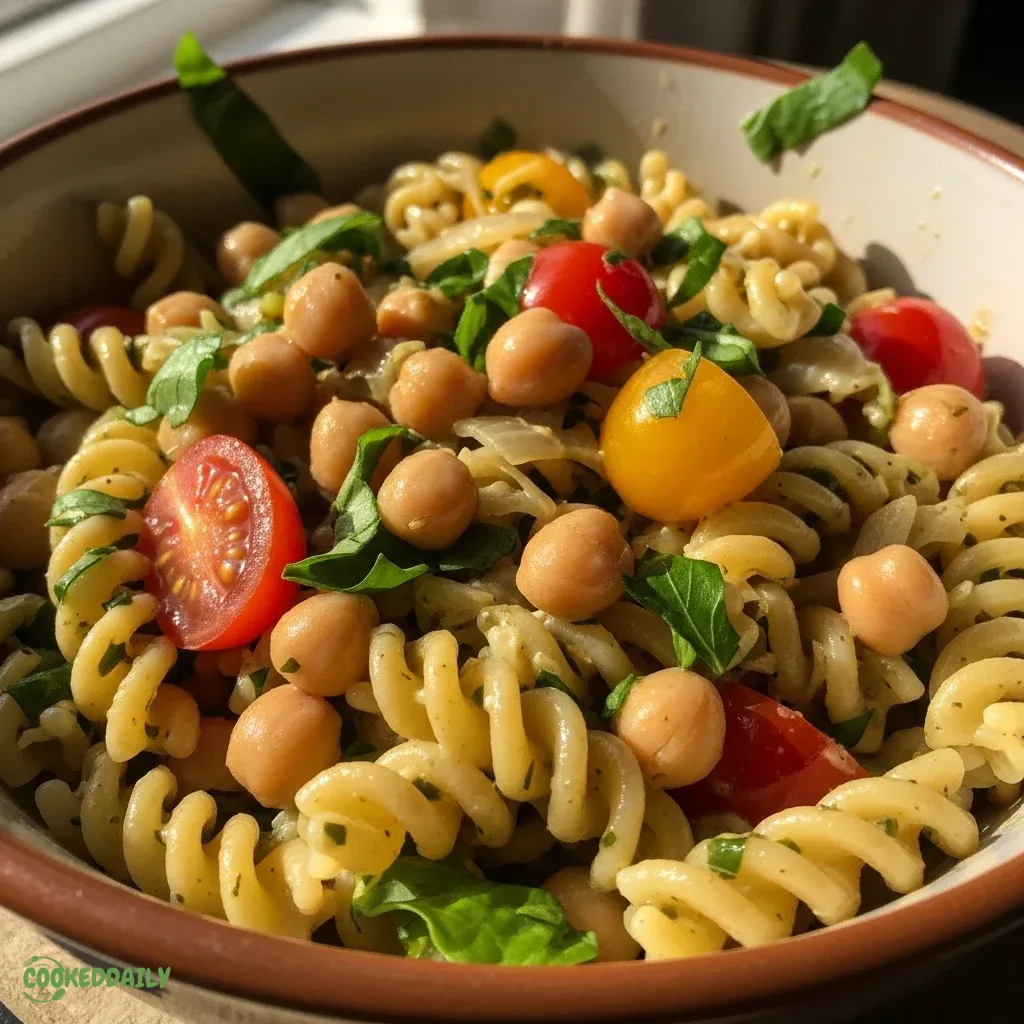
When I serve this Vegetarian Chickpea Pasta, I like to keep the side dishes light and refreshing to balance the heartiness of the beans. A simple arugula salad with a lemon-tahini dressing is my go-to choice.
The peppery bite of the arugula complements the garlic in the pasta perfectly. If I am hosting a bigger Sunday dinner, I might also roast a tray of seasonal vegetables like zucchini or bell peppers to add even more color and variety to the table.
For a cozy touch, a loaf of crusty sourdough bread is a must-have. There is nothing better than using a piece of warm bread to swipe up the last bits of garlic-infused oil and tomato juice from the bottom of your bowl.
If you are looking for a complete plant-based spread, consider serving the Vegetarian Chickpea Pasta alongside some roasted broccolini topped with lemon zest. It creates a beautiful, restaurant-quality meal right in the comfort of your own home, surrounded by the people you love.
Complementing the heartiness of your Vegetarian Chickpea Pasta with a crisp side is important, and I highly recommend serving it with Vegetarian Sweet Potato Tacos for a colorful and refreshing addition.
FAQs
Can I use dried chickpeas instead of canned for this Vegetarian Chickpea Pasta?
Absolutely! If you have the time, cooking dried chickpeas from scratch can add an even deeper flavor and a firmer texture to your Vegetarian Chickpea Pasta. Just make sure to soak them overnight and boil them until they are tender before adding them to the skillet. One and a half cups of cooked chickpeas is roughly equivalent to one 15-ounce can.
Is this recipe suitable for meal prep?
Yes, this is a fantastic meal prep option. Because the Vegetarian Chickpea Pasta does not rely on heavy dairy, it does not separate or become greasy when stored. You can easily double the batch on a Sunday and have high-protein lunches ready for the entire work week. It tastes just as good cold as a pasta salad, too!
How can I make this Vegetarian Chickpea Pasta more “creamy” without adding dairy?
If you want a silkier, creamier texture, you can take a half cup of the cooked chickpeas and blend them with a little bit of the pasta water and olive oil until smooth. Stir this “chickpea cream” back into the pasta at the end. It adds a wonderful richness to the Vegetarian Chickpea Pasta while keeping it entirely plant-based and healthy.
Vegetarian Chickpea Pasta combines the health benefits of chickpeas with the comfort of pasta, creating a nutrient-rich dish that can easily be customized. For more information about the health benefits and culinary uses of chickpeas, check out this detailed overview on chickpeas.
Nutrition Information (per serving)
This Vegetarian Chickpea Pasta is a nutritional powerhouse, offering a balanced mix of complex carbohydrates, plant-based proteins, and healthy fats. It is a meal you can feel truly good about serving to your family, knowing it supports their health and well-being.
| Nutrient | Amount per Serving |
|---|---|
| Calories | 410 kcal |
| Protein | 16g |
| Total Fat | 12g |
| Saturated Fat | 1.5g |
| Carbohydrates | 62g |
| Dietary Fiber | 11g |
| Sugars | 4g (Natural) |
| Sodium | 350mg |
I hope this Vegetarian Chickpea Pasta finds a permanent spot in your recipe rotation. It has certainly become a staple in my home, reminding us that the simplest ingredients often create the most memorable moments. Whether you are sharing it with a house full of guests or enjoying a quiet moment of reflection over a warm bowl, I hope every bite brings you comfort and a sense of connection. Happy cooking, from my kitchen to yours!
Print
Vegetarian Chickpea Pasta
- Total Time: 30 mins
- Yield: 4 servings 1x
- Diet: Gluten Free
Description
Vegetarian Chickpea Pasta combines the earthy heartiness of chickpeas with perfectly al dente pasta, all tossed in a vibrant, herb-infused sauce that brings comfort and joy to any occasion.
Ingredients
16 oz Pasta (Penne, Fusilli, or Rigatoni)
30 oz Cooked Chickpeas (2 cans of 15 oz each)
1/4 cup Extra Virgin Olive Oil
4–6 cloves Fresh Garlic (minced)
2 cups Cherry Tomatoes (halved)
3 cups Fresh Baby Spinach (packed)
1/2 cup Vegetable Broth (low-sodium)
1 tbsp Lemon Juice (freshly squeezed)
1/2 tsp Red Pepper Flakes (optional)
1/2 cup Fresh Parsley and Basil (chopped)
Sea Salt and Black Pepper (to taste)
Instructions
- Prepare the Pasta: Bring a large pot of water to a rolling boil. Add salt and cook pasta until al dente. Reserve one cup of pasta water before draining
- Sauté the Aromatics: Heat olive oil in a skillet over medium heat. Add minced garlic and red pepper flakes, sauté for 1-2 minutes
- Blister the Tomatoes: Add halved cherry tomatoes to the skillet. Cook for 5-7 minutes until softened
- Incorporate the Chickpeas: Add rinsed chickpeas and vegetable broth, simmer for 5 minutes
- Wilt the Greens: Add baby spinach a handful at a time, stirring until wilted
- Combine and Emulsify: Add cooked pasta and half of the reserved pasta water, along with fresh lemon juice. Toss to combine
- Final Seasoning: Stir in fresh parsley and basil, and adjust seasoning with salt and black pepper
Notes
Store leftovers in an airtight glass container for 3-4 days. Reheat on the stovetop with a splash of water or olive oil.
- Prep Time: 20 mins
- Cook Time: 10 mins
- Category: Dinner
- Method: Stovetop
- Cuisine: American
Nutrition
- Serving Size: 1 bowl
- Calories: 410 kcal
- Sugar: 4g
- Sodium: 350mg
- Fat: 12g
- Saturated Fat: 1.5g
- Unsaturated Fat: 10.5g
- Trans Fat: 0g
- Carbohydrates: 62g
- Fiber: 11g
- Protein: 16g
- Cholesterol: 0mg