

This vibrant Vegetarian Pasta Primavera brings the healing power of seasonal vegetables directly to your dinner table. As a nutritionist, I believe that every meal offers an opportunity to nourish your cells and provide your body with the phytonutrients it needs to thrive. You will love the crisp texture of fresh produce paired with the comforting bite of al dente whole-grain noodles.
This dish balances complex carbohydrates, healthy fats, and essential fiber perfectly to support steady energy levels throughout your evening. We skip the heavy creams and inflammatory seed oils found in traditional versions, focusing instead on pure, medicinal ingredients. Enjoy a symphony of colors that signals a wide array of antioxidants in every single bite. This Vegetarian Pasta Primavera is more than just a meal; it is a celebration of plant-based vitality and flavor harmony.
Why You’ll Love This Vegetarian Pasta Primavera
- Nutrient Density: Every serving packs a massive dose of Vitamin C, Vitamin A, and fiber to support immune function and digestive health.
- Heart-Healthy Fats: We use premium extra virgin olive oil to provide monounsaturated fats that support cardiovascular wellness.
- Quick and Versatile: You can prepare this Vegetarian Pasta Primavera in under 30 minutes, making it ideal for busy weeknights.
- Clean Ingredients: This recipe contains no refined sugars or processed additives, ensuring you feel energized rather than sluggish after eating.
Ingredients You’ll Need
Quality matters when you use food as medicine. I recommend choosing organic produce whenever possible to reduce your exposure to synthetic pesticides. The foundation of this Vegetarian Pasta Primavera lies in the freshness of the harvest. Below is a detailed list of the ingredients required to create this healing masterpiece.
| Ingredient | Quantity | Nutritional Benefit |
|---|---|---|
| Whole Grain or Chickpea Pasta | 12 oz | Provides sustained energy and essential fiber. |
| Extra Virgin Olive Oil | 3 tbsp | Rich in polyphenols and anti-inflammatory fats. |
| Fresh Broccoli Florets | 2 cups | Contains sulforaphane for detoxification support. |
| Yellow and Red Bell Peppers | 2 large | High in antioxidants like Vitamin C and beta-carotene. |
| Zucchini (sliced) | 1 medium | Promotes healthy digestion and hydration. |
| Carrots (julienned) | 2 medium | Supports eye health and skin vitality. |
| Fresh Garlic (minced) | 4 cloves | Offers potent antimicrobial and heart-health properties. |
| Cherry Tomatoes | 1 cup | Provides lycopene, a powerful antioxidant for cellular health. |
| Fresh Lemon Juice | 1 tbsp | Aids in digestion and enhances mineral absorption. |
| Fresh Basil and Parsley | 1/2 cup | Rich in chlorophyll and essential minerals. |
Substitutions & Variations
Note: This video is for demonstration purposes and may use a slightly different method.
Adaptability is key to a sustainable, healthy lifestyle. You can easily modify this Vegetarian Pasta Primavera to suit your dietary needs or the changing seasons. If you prefer a lower-carbohydrate option, try using spiralized zucchini or butternut squash noodles instead of traditional pasta. For those following a strictly gluten-free diet, brown rice pasta or lentil-based noodles offer a wonderful texture while boosting the protein content of your Vegetarian Pasta Primavera.
If you enjoy a bit of heat, add a pinch of red pepper flakes to stimulate your metabolism. During the autumn months, you might replace the zucchini and peppers with roasted butternut squash and kale for a seasonal twist on the classic Vegetarian Pasta Primavera.
For a creamy element without the dairy, a dollop of cashew cream or a sprinkle of nutritional yeast provides a cheesy flavor and a boost of B vitamins. Always remember that the goal of Vegetarian Pasta Primavera is to incorporate as much variety as possible to feed your gut microbiome.
Adaptability is key to a sustainable, healthy lifestyle. You can easily modify this Vegetarian Pasta Primavera to suit your dietary needs or the changing seasons. If you’re looking for a delightful twist, consider trying out the Vegetarian Spinach Ricotta Stuffed Shells for a rich flavor experience.
Step-by-Step Instructions
- Boil the Pasta: Fill a large pot with water and a pinch of sea salt. Bring it to a boil and cook your chosen pasta according to the package directions. Aim for al dente texture to maintain a lower glycemic index. Drain the pasta, but reserve half a cup of the starchy cooking water.
- Sauté the Aromatics: In a large skillet, heat the extra virgin olive oil over medium heat. Add the minced garlic and sauté for about one minute until fragrant. Avoid browning the garlic, as this can make it bitter and reduce its health benefits.
- Cook the Hearty Veggies: Add the broccoli and carrots to the skillet. These denser vegetables require a bit more time to soften. Sauté them for 4 to 5 minutes, allowing them to remain vibrant and slightly crisp. This method preserves the heat-sensitive vitamins in your Vegetarian Pasta Primavera.
- Add the Soft Veggies: Toss in the bell peppers and zucchini. Continue to cook for another 3 to 4 minutes. You want the vegetables to be tender but still possess a “snap” when you bite into them.
- Integrate the Tomatoes: Add the cherry tomatoes to the pan. Cook them just until they begin to burst, releasing their natural juices to create a light, healthy sauce for your Vegetarian Pasta Primavera.
- Combine and Season: Transfer the cooked pasta into the skillet with the vegetables. Pour in the reserved pasta water and the fresh lemon juice. Toss everything together over low heat until the pasta is well-coated.
- The Final Flourish: Remove from heat and stir in the fresh basil and parsley. Season with a small amount of sea salt and cracked black pepper to taste. Your Vegetarian Pasta Primavera is now ready to nourish your body.
Pro Tips for Success
To ensure your Vegetarian Pasta Primavera turns out perfectly every time, pay close attention to the order in which you cook your vegetables. Not all produce cooks at the same rate. By adding the sturdier vegetables like carrots and broccoli first, you ensure that nothing ends up mushy.
I always recommend using a large skillet or a wide dutch oven. Overcrowding the pan causes the vegetables to steam rather than sauté, which can dull their colors and soften their texture too much.
Another secret to a restaurant-quality Vegetarian Pasta Primavera is the use of pasta water. The starch in the water helps the olive oil and lemon juice emulsify, creating a silky coating that clings to every strand of pasta. Finally, never underestimate the power of fresh herbs. Adding them at the very end preserves their delicate oils and bright flavors, providing a refreshing finish to your Vegetarian Pasta Primavera.
To ensure your Vegetarian Pasta Primavera turns out perfectly every time, pay close attention to the order in which you cook your vegetables. I always recommend using a large skillet or a wide dutch oven. For an exciting addition to your meal, consider the refreshing Vegetarian Mediterranean Salad that pairs wonderfully with this dish.
Storage & Reheating Tips
You can store any leftover Vegetarian Pasta Primavera in an airtight glass container in the refrigerator for up to four days. Glass is preferable to plastic to avoid chemical leaching and to keep the flavors clean. This dish actually tastes wonderful the next day as the vegetables continue to marinate in the garlic and lemon-infused oil.
When you are ready to reheat your Vegetarian Pasta Primavera, I suggest using the stovetop rather than a microwave. Place the leftovers in a pan over medium-low heat and add a splash of water or a teaspoon of olive oil to loosen the noodles. Stir gently until heated through. If you prefer to eat it cold, this Vegetarian Pasta Primavera also functions beautifully as a chilled pasta salad for a nutritious office lunch.
What to Serve With This Recipe
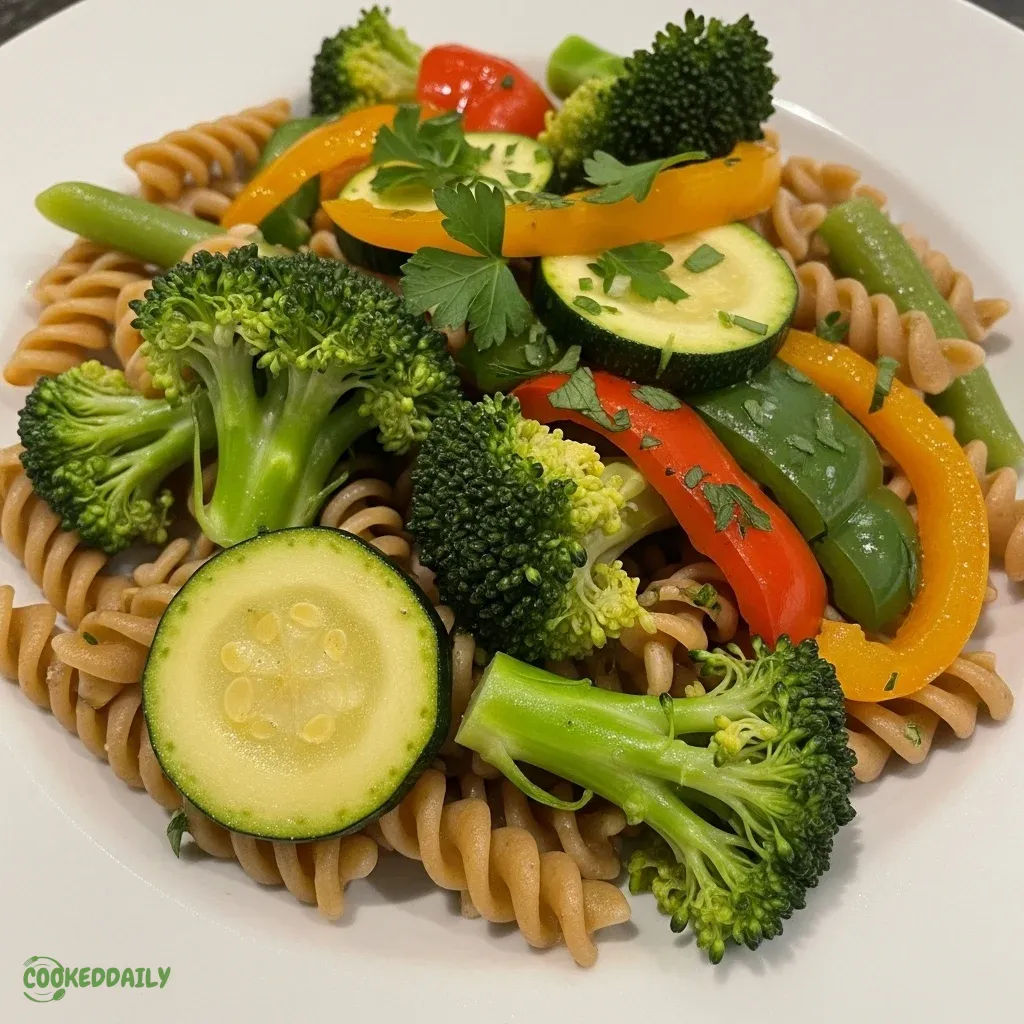
While this Vegetarian Pasta Primavera is a complete meal on its own, you can enhance the experience with several healthy pairings. A simple side salad of arugula and radicchio with a light balsamic vinaigrette adds a bitter element that aids in digestion. The bitterness of the greens complements the sweetness of the sautéed bell peppers and carrots in the Vegetarian Pasta Primavera.
For extra protein, consider serving this alongside some grilled organic tempeh or a side of roasted chickpeas. If you are not strictly vegan, a small piece of wild-caught salmon or a poached pasture-raised egg on top can provide high-quality protein and Omega-3 fatty acids.
If you want to keep the meal light, a side of roasted asparagus or steamed artichokes further increases your fiber intake. Always aim for a plate that is at least 70% colorful plants when enjoying your Vegetarian Pasta Primavera.
While this Vegetarian Pasta Primavera is a complete meal on its own, you can enhance the experience with several healthy pairings. For extra protein, consider serving this alongside the comforting Vegetarian Gnocchi Soup, which offers a delightful contrast in taste and texture.
FAQs
Can I make this recipe grain-free?
Yes, absolutely. To make a grain-free Vegetarian Pasta Primavera, simply swap the traditional pasta for vegetable noodles made from zucchini, sweet potatoes, or heart of palm. These options significantly lower the carbohydrate count while adding even more vitamins and minerals to your meal. You may also use grain-free pasta brands made from cassava flour or almond flour.
Is Vegetarian Pasta Primavera suitable for meal prep?
This Vegetarian Pasta Primavera is an excellent choice for meal prep. Since the vegetables are sautéed until just tender, they hold up well when reheated. I recommend keeping the fresh herbs separate and adding them just before eating to maintain their bright flavor and nutritional integrity. It is a fantastic way to ensure you have a “clean” and balanced meal ready during a busy week.
What are the best seasonal vegetables to include?
The beauty of Vegetarian Pasta Primavera is its flexibility. In the spring, try adding asparagus, peas, and ramps. In the summer, focus on heirloom tomatoes, eggplant, and yellow squash.
For a winter version, consider roasted Brussels sprouts, cauliflower, and parsnips. Choosing seasonal produce ensures you are getting the highest concentration of nutrients and the best possible flavor for your Vegetarian Pasta Primavera.
Vegetarian Pasta Primavera is a dish that emphasizes seasonal vegetables, offering a vibrant and nutritious meal option. This celebration of fresh produce and whole grains is a great example of how plant-based cooking can be both healthy and satisfying, making it an excellent addition to any culinary repertoire that focuses on balanced nutrition.
Nutrition Information (per serving)
This data represents a typical serving of Vegetarian Pasta Primavera made with whole wheat pasta and the listed vegetables. This meal provides a balanced ratio of macronutrients to keep you satiated and nourished.
| Calories | 385 kcal |
| Total Fat | 12g |
| Saturated Fat | 1.5g |
| Sodium | 45mg |
| Total Carbohydrates | 58g |
| Dietary Fiber | 11g |
| Protein | 12g |
| Vitamin C | 140% DV |
| Vitamin A | 90% DV |

Vegetarian Pasta Primavera
- Total Time: 30 mins
- Yield: 4 servings 1x
- Diet: Vegetarian
Description
This vibrant Vegetarian Pasta Primavera brings the healing power of seasonal vegetables directly to your dinner table. Packed with nutrient-dense ingredients, this dish balances complex carbohydrates, healthy fats, and essential fiber, making it a wholesome and delicious meal.
Ingredients
12 oz Whole Grain or Chickpea Pasta
3 tbsp Extra Virgin Olive Oil
2 cups Fresh Broccoli Florets
2 large Yellow and Red Bell Peppers
1 medium Zucchini (sliced)
2 medium Carrots (julienned)
4 cloves Fresh Garlic (minced)
1 cup Cherry Tomatoes
1 tbsp Fresh Lemon Juice
1/2 cup Fresh Basil and Parsley
Instructions
- Boil the Pasta: Fill a large pot with water and a pinch of sea salt. Bring it to a boil and cook your chosen pasta according to the package directions. Aim for al dente texture to maintain a lower glycemic index. Drain the pasta, but reserve half a cup of the starchy cooking water
- Sauté the Aromatics: In a large skillet, heat the extra virgin olive oil over medium heat. Add the minced garlic and sauté for about one minute until fragrant. Avoid browning the garlic
- Cook the Hearty Veggies: Add the broccoli and carrots to the skillet and sauté for 4 to 5 minutes
- Add the Soft Veggies: Toss in the bell peppers and zucchini, continuing to cook for another 3 to 4 minutes
- Integrate the Tomatoes: Add the cherry tomatoes to the pan and cook until they begin to burst
- Combine and Season: Transfer the cooked pasta into the skillet with the vegetables, pour in reserved pasta water and fresh lemon juice, then toss together
- The Final Flourish: Remove from heat, stir in fresh basil and parsley, and season with sea salt and cracked black pepper
Notes
For best results, add fresh herbs at the very end to preserve their delicate oils.
Use reserved pasta water to create a silky sauce that coats the pasta.
- Prep Time: 20 mins
- Cook Time: 10 mins
- Category: Dinner
- Method: Sautéing
- Cuisine: Italian
Nutrition
- Serving Size: 1 bowl
- Calories: 385 kcal
- Sugar: 4 g
- Sodium: 45 mg
- Fat: 12 g
- Saturated Fat: 1.5 g
- Unsaturated Fat: 10.5 g
- Trans Fat: 0 g
- Carbohydrates: 58 g
- Fiber: 11 g
- Protein: 12 g
- Cholesterol: 0 mg