

As a nutritionist, I believe that every meal represents an opportunity to nourish your cells and revitalize your body. This vibrant Vegetarian Pasta Primavera combines the crisp textures of seasonal vegetables with the comforting embrace of al dente pasta. You will experience a symphony of flavors ranging from the sweetness of bell peppers to the earthy notes of zucchini.
Each bite delivers a concentrated dose of essential micronutrients and dietary fiber to support your digestive health. By choosing high-quality, whole-food ingredients, you transform a simple dinner into a functional medicine powerhouse. This Vegetarian Pasta Primavera proves that healthy eating never requires you to sacrifice deep, satisfying flavor.
Why You Will Adore This Nutrient-Dense Vegetarian Pasta Primavera
- Phytochemical Abundance: This dish features a rainbow of vegetables, providing a diverse range of antioxidants that combat oxidative stress.
- High-Fiber Content: By using whole-grain or legume-based pasta, you support a healthy gut microbiome and maintain stable blood sugar levels.
- Quick and Efficient: You can prepare this entire Vegetarian Pasta Primavera in under 30 minutes, making it perfect for busy weeknights.
- Heart-Healthy Fats: We utilize Extra Virgin Olive Oil, which provides monounsaturated fats and polyphenols for cardiovascular support.
- Customizable Nutrition: You can easily swap vegetables based on what is in season, ensuring you receive a variety of vitamins year-round.
Ingredients You’ll Need
To create a truly healing Vegetarian Pasta Primavera, the quality of your ingredients matters immensely. I always recommend organic produce whenever possible to reduce your exposure to synthetic pesticides.
| Ingredient | Quantity | Nutritional Highlight |
|---|---|---|
| Whole Grain or Chickpea Penne | 12 oz | Rich in fiber and complex carbohydrates. |
| Extra Virgin Olive Oil | 3 tbsp | Powerful anti-inflammatory properties. |
| Garlic Cloves (minced) | 4 cloves | Contains allicin for immune support. |
| Red Bell Pepper (sliced) | 1 large | Exceptional source of Vitamin C. |
| Yellow Squash (half-moons) | 1 medium | Provides manganese and Vitamin A. |
| Zucchini (half-moons) | 1 medium | High water content for hydration. |
| Broccoli Florets | 2 cups | Sulforaphane for detoxification support. |
| Carrots (julienned) | 2 medium | Beta-carotene for eye health. |
| Frozen Peas | 1 cup | Plant-based protein and Vitamin K. |
| Lemon Juice (fresh) | 2 tbsp | Alkalizing and aids in iron absorption. |
| Fresh Basil Leaves | 1/4 cup | Antibacterial and anti-inflammatory. |
| Parmesan Cheese (optional) | 1/4 cup | Calcium and protein (use vegan alternative if desired). |
Substitutions & Variations
Note: This video is for demonstration purposes and may use a slightly different method.
The beauty of Vegetarian Pasta Primavera lies in its versatility. If you follow specific dietary protocols, you can easily adapt this recipe without losing its essence.
- Gluten-Free Option: Substitute the wheat pasta with brown rice pasta, quinoa pasta, or chickpea pasta. These alternatives often provide more protein and are gentler on the digestive system for those with sensitivities.
- Vegan Friendly: Omit the Parmesan cheese or use a nutritional yeast blend. Nutritional yeast adds a cheesy flavor along with vital B vitamins.
- Oil Alternatives: While I prefer Extra Virgin Olive Oil for its flavor profile, Avocado Oil is a fantastic substitute due to its high smoke point and healthy fat content.
- Vegetable Swaps: In the spring, try adding asparagus and leeks. In the autumn, roasted butternut squash or kale can transform your Vegetarian Pasta Primavera into a seasonal delight.
- Protein Boost: For those needing extra satiety, add canned chickpeas, cannellini beans, or organic hemp seeds to increase the amino acid profile of the meal.
If you’re looking to maintain a gluten-free diet while enjoying the richness of Vegetarian Pasta Primavera, consider trying a refreshing Vegetarian Mediterranean Salad as a side dish. This salad complements the pasta beautifully and adds a light, zesty flavor to your meal.
Step-by-Step Instructions
To preserve the maximum amount of nutrients in your Vegetarian Pasta Primavera, we will use a light searing method rather than boiling the vegetables into submission.
- Prepare the Pasta: Bring a large pot of filtered water to a boil. Add the pasta and cook according to the package directions until al dente. Reserve about half a cup of the starchy pasta water before draining.
- Sauté the Aromatics: While the pasta cooks, heat the Extra Virgin Olive Oil in a large skillet over medium heat. Add the minced garlic and sauté for about 60 seconds until fragrant. Avoid browning the garlic to prevent a bitter taste.
- Lightly Sear the Dense Veggies: Add the carrots and broccoli florets to the skillet first. Sauté these for 3 to 4 minutes. These vegetables require a bit more time to soften while maintaining their vibrant color.
- Add the Quick-Cooking Veggies: Toss in the bell peppers, zucchini, and yellow squash. Continue to sauté for another 5 minutes. You want the vegetables to be “tender-crisp” to ensure the enzymes and vitamins remain intact.
- Incorporate the Peas: Stir in the frozen peas and cook for 2 minutes. Peas cook very quickly and provide a lovely pop of sweetness to the Vegetarian Pasta Primavera.
- Combine and Emulsify: Add the cooked pasta directly into the skillet with the vegetables. Pour in the reserved pasta water and the fresh lemon juice. This creates a light, “clean” sauce that coats every ingredient without the need for heavy creams.
- Final Seasoning: Turn off the heat. Fold in the fresh basil and the Parmesan cheese or nutritional yeast. Season with a pinch of sea salt and cracked black pepper to taste.
Pro Tips for Success
To achieve a restaurant-quality Vegetarian Pasta Primavera at home, pay close attention to the texture of your produce. Overcooking vegetables leads to a loss of water-soluble vitamins like Vitamin C and B-complex. Therefore, always aim for a vibrant, bright color rather than a dull, soft appearance.
Furthermore, cutting your vegetables into uniform sizes ensures they all cook at the same rate. This consistency provides a much better mouthfeel and visual appeal.
If you find the dish a bit dry, do not reach for more oil. Instead, use a splash more of the pasta cooking water. This water contains starch that helps the lemon juice and oil bind to the noodles, creating a silky texture.
Lastly, always use fresh lemon juice. Bottled lemon juice often contains preservatives and lacks the bright, enzymatic spark that fresh citrus provides to the Vegetarian Pasta Primavera.
To enhance the quality of your Vegetarian Pasta Primavera, perfecting your vegetable cooking technique is key. For a warm and satisfying addition, serve it alongside a bowl of Vegetarian Gnocchi Soup which balances textures and keeps the meal light yet filling.
Storage & Reheating Tips
You can store leftovers of this Vegetarian Pasta Primavera in an airtight glass container in the refrigerator for up to 4 days. Glass is preferable to plastic as it does not leach chemicals into your food, especially when reheating. To maintain the integrity of the vegetables, I recommend reheating the pasta in a skillet over low heat with a tablespoon of water or broth.
Avoid using a microwave if possible, as it can make the pasta rubbery and the vegetables mushy. If you are meal prepping, you might consider undercooking the pasta slightly by one or two minutes. Consequently, when you reheat the Vegetarian Pasta Primavera, the pasta will finish cooking perfectly without becoming overdone. This dish does not freeze well because the high water content in the zucchini and peppers leads to a soggy texture upon thawing.
What to Serve With This Recipe
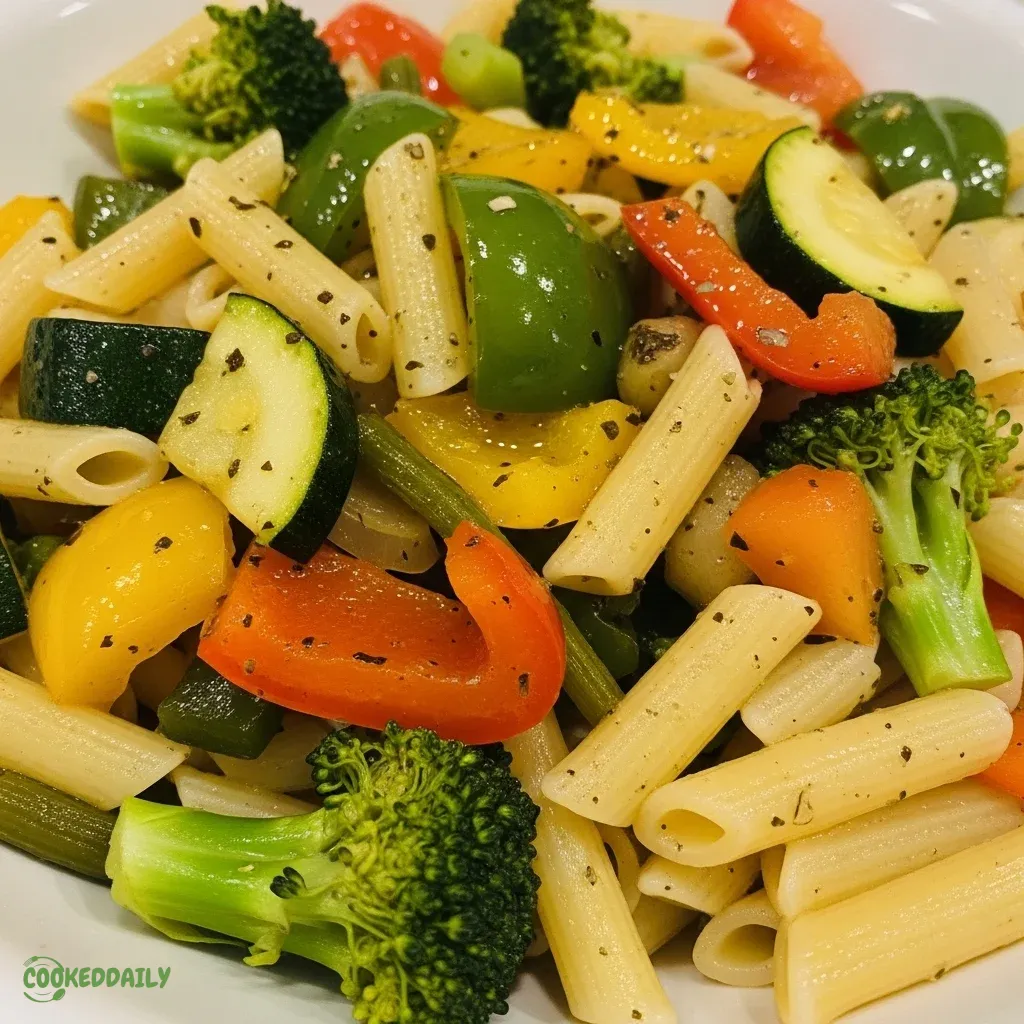
While this Vegetarian Pasta Primavera is a complete meal on its own, you can enhance the nutritional profile by adding specific side dishes.
- Arugula Salad: A simple bed of arugula tossed with lemon and Extra Virgin Olive Oil provides bitter compounds that stimulate digestion.
- Roasted Garlic Bread: Use a sprouted grain baguette rubbed with fresh garlic and olive oil for a fiber-rich accompaniment.
- Massaged Kale Salad: Use a tahini-based dressing to add healthy fats and calcium to your meal.
- Grilled Artichokes: These are excellent for liver health and provide a unique texture that complements the Vegetarian Pasta Primavera perfectly.
While this dish stands alone as a complete meal, consider enriching it with sides that boost both flavor and nutrition. A great option is to serve it with High Protein Healthy Keto Vegetarian Recipes that harmonize with the freshness of the pasta dish.
FAQs
Can I make this Vegetarian Pasta Primavera low-carb?
Yes, you absolutely can. To reduce the carbohydrate load, simply replace the traditional pasta with zucchini noodles (zoodles) or spaghetti squash. If using zoodles, only sauté them for 1 to 2 minutes at the very end to prevent them from releasing too much water. This modification makes the Vegetarian Pasta Primavera suitable for those monitoring their glycemic index or following a ketogenic lifestyle.
Is Pasta Primavera traditionally healthy?
Traditional versions of this dish often use heavy cream and excessive amounts of butter, which can be high in saturated fats and calories. However, our version of Vegetarian Pasta Primavera focuses on “clean” ingredients. By using Extra Virgin Olive Oil and a light lemon-based sauce, we emphasize heart health and nutrient density. We prioritize the vegetables as the star of the show, making it a truly health-promoting meal.
Can I add protein to this Vegetarian Pasta Primavera?
Certainly. From a nutritional perspective, adding a clean protein source can help with muscle repair and satiety. I recommend adding grilled organic tempeh, sautéed organic tofu, or a handful of toasted pine nuts. If you are not strictly vegan, a soft-boiled egg on top can provide high-quality choline and protein, further balancing the macronutrient profile of your Vegetarian Pasta Primavera.
Vegetarian Pasta Primavera is a vibrant dish showcasing a variety of seasonal vegetables paired with pasta, typically flavored with olive oil and garlic. This dish highlights the importance of incorporating diverse vegetables into your diet, promoting a wide range of nutrients and health benefits, as seen in dishes like pasta.
Nutrition Information (per serving)
The following data represents a balanced portion of Vegetarian Pasta Primavera. Note that using legume-based pasta will increase the protein and fiber counts significantly.
| Nutrient | Amount |
|---|---|
| Calories | 385 kcal |
| Total Fat | 12g |
| Saturated Fat | 2g |
| Cholesterol | 0mg (if vegan) |
| Sodium | 150mg |
| Total Carbohydrates | 58g |
| Dietary Fiber | 9g |
| Sugars | 6g (natural) |
| Protein | 14g |
| Vitamin C | 110% DV |
| Vitamin A | 85% DV |

Vegetarian Pasta Primavera
- Total Time: 30 mins
- Yield: 4 servings 1x
- Diet: Gluten Free option available
Description
This vibrant Vegetarian Pasta Primavera combines the crisp textures of seasonal vegetables with the comforting embrace of al dente pasta. Experience flavors from bell peppers to zucchini, delivering essential micronutrients and dietary fiber.
Ingredients
12 oz Whole Grain or Chickpea Penne
3 tbsp Extra Virgin Olive Oil
4 cloves Garlic (minced)
1 large Red Bell Pepper (sliced)
1 medium Yellow Squash (half-moons)
1 medium Zucchini (half-moons)
2 cups Broccoli Florets
2 medium Carrots (julienned)
1 cup Frozen Peas
2 tbsp Lemon Juice (fresh)
1/4 cup Fresh Basil Leaves
1/4 cup Parmesan Cheese (optional)
Instructions
- Bring a large pot of filtered water to a boil. Cook the pasta according to package directions until al dente. Reserve about half a cup of the starchy pasta water before draining
- In a large skillet, heat the Extra Virgin Olive Oil over medium heat. Add the minced garlic and sauté for about 60 seconds until fragrant
- Add the carrots and broccoli florets to the skillet first. Sauté for 3 to 4 minutes
- Then add the bell peppers, zucchini, and yellow squash. Continue to sauté for another 5 minutes until vegetables are tender-crisp
- Incorporate the frozen peas and cook for 2 minutes
- Add the cooked pasta to the skillet with the vegetables. Pour in the reserved pasta water and the fresh lemon juice. Mix well
- Turn off the heat. Fold in the fresh basil and Parmesan cheese (or nutritional yeast). Season with sea salt and cracked black pepper to taste
Notes
Store leftovers in an airtight glass container in the refrigerator for up to 4 days. Reheat in a skillet over low heat with a tablespoon of water or broth.
Avoid microwaving to maintain texture.
- Prep Time: 20 mins
- Cook Time: 10 mins
- Category: Dinner
- Method: Sautéing
- Cuisine: Italian
Nutrition
- Serving Size: 1 bowl
- Calories: 385 kcal
- Sugar: 6g
- Sodium: 150mg
- Fat: 12g
- Saturated Fat: 2g
- Trans Fat: 0g
- Carbohydrates: 58g
- Fiber: 9g
- Protein: 14g
- Cholesterol: 0mg