

The Spinach and Feta Omelet represents the pinnacle of efficient, high-protein cooking for the modern minimalist. This dish combines the earthy notes of fresh greens with the sharp, salty punch of Greek feta cheese to create a balanced meal in under ten minutes. You will appreciate the creamy texture of the eggs contrasting with the slight bite of wilted spinach.
I rely on this recipe because it requires only one pan and minimal cleanup, fitting perfectly into a packed schedule. It delivers a sophisticated flavor profile without the need for complex techniques or exotic ingredients. Whether you are fueling up for a long workday or recovering from a morning workout, this Spinach and Feta Omelet provides sustained energy without the mid-morning crash. Consequently, it has become a staple in my kitchen for its reliability and nutritional density.
Why You’ll Love This Spinach and Feta Omelet
- Unmatched Efficiency: You can prepare, cook, and plate this meal in less than ten minutes total.
- Minimal Cleanup: This recipe uses exactly one non-stick skillet and one bowl, saving you precious time at the sink.
- High Nutritional Value: The Spinach and Feta Omelet is packed with iron, vitamin K, and high-quality protein to keep you satiated.
- Foolproof Technique: I have designed these instructions to ensure your eggs never stick and your spinach never turns soggy.
- Dietary Versatility: It is naturally gluten-free and fits perfectly into a ketogenic or low-carb lifestyle.
Ingredients You’ll Need
Quality matters when you use few ingredients. I recommend using organic pasture-raised eggs and high-quality extra virgin olive oil for the best results. Avoid inflammatory seed oils to keep this meal as healthy as possible. The following ingredients will produce one perfect Spinach and Feta Omelet.
| Ingredient | Quantity | Purpose |
|---|---|---|
| Pasture-Raised Eggs | 3 Large | The protein-rich base of the dish. |
| Fresh Baby Spinach | 1 Heaping Cup | Adds fiber, iron, and a vibrant color. |
| Feta Cheese | 2 Tablespoons | Provides saltiness and a creamy texture. |
| Extra Virgin Olive Oil | 1 Tablespoon | A healthy fat for sautéing and non-sticking. |
| Sea Salt | To Taste | Enhances the natural flavors of the eggs. |
| Black Pepper | To Taste | Adds a subtle, earthy heat. |
Substitutions & Variations
Note: This video is for demonstration purposes and may use a slightly different method.
While the classic Spinach and Feta Omelet is nearly perfect, you can adapt it based on what is in your pantry. If you want to increase the healthy fats, consider adding a few slices of avocado on top after cooking. For those who prefer a different cheese, goat cheese provides a similar tang with an even creamier finish.
If you find yourself without olive oil, avocado oil is an excellent substitute due to its high smoke point and neutral flavor profile. To add a bit of a kick, a pinch of red pepper flakes during the spinach sautéing phase works wonders.
Furthermore, you can swap fresh spinach for kale or swiss chard, though you must sauté these hardier greens for an extra minute to ensure they soften properly. Always prioritize whole, unprocessed foods when making substitutions to maintain the integrity of this healthy Spinach and Feta Omelet.
While the classic Spinach and Feta Omelet is nearly perfect, you can adapt it based on what is in your pantry. For another nutritious option, consider trying this Lemon Spinach Stew that offers a lovely twist on spinach-inspired dishes.
Step-by-Step Instructions
- Prepare the Eggs: Crack three large eggs into a small mixing bowl. Add a pinch of sea salt and freshly cracked black pepper. Use a fork to whisk the eggs vigorously for about thirty seconds. You want the yolks and whites fully incorporated with a few bubbles on the surface for a fluffier Spinach and Feta Omelet.
- Sauté the Spinach: Place a medium non-stick skillet over medium heat and add the extra virgin olive oil. Once the oil shimmers, toss in the fresh baby spinach. Sauté for about 60 seconds until the leaves just begin to wilt. Do not overcook the greens; they should remain bright green.
- Pour the Eggs: Push the spinach to the center of the pan so it is evenly distributed. Carefully pour the whisked eggs over the spinach. Tilt the pan in a circular motion to ensure the eggs cover the entire bottom surface of the skillet.
- Set the Base: Allow the eggs to cook undisturbed for about one minute. Once the edges begin to set and look opaque, use a silicone spatula to gently lift the edges and let the raw egg flow underneath. This technique ensures an even cook without browning the bottom too much.
- Add the Feta: When the top of the eggs looks mostly set but still slightly moist, sprinkle the crumbled feta cheese over one-half of the omelet. This allows the cheese to warm up and integrate with the other components.
- Fold and Serve: Carefully slide your spatula under the side without cheese and fold it over the feta. Press down gently with the spatula to “seal” the Spinach and Feta Omelet. Let it cook for another thirty seconds, then slide it onto a clean plate.
Pro Tips for Success
To master the Spinach and Feta Omelet, you must focus on temperature control. If your pan is too hot, the eggs will become rubbery and brown quickly. I suggest keeping the heat at a steady medium or even medium-low.
Moreover, never use a metal spatula on a non-stick pan, as scratches will cause the eggs to stick in the future. If you want a restaurant-quality finish, add a teaspoon of water or coconut milk to your eggs before whisking; the steam created during cooking makes the omelet exceptionally light. Another secret is to use “dry” feta.
If your feta comes in brine, pat it dry with a paper towel before crumbling it. This prevents excess moisture from making your Spinach and Feta Omelet watery. Finally, always wilt your spinach before adding the eggs. Raw spinach releases a lot of water as it cooks, which can ruin the texture of the eggs if they are cooked together from the start.
To master the Spinach and Feta Omelet, you must focus on temperature control. For a delightful side that complements your omelet, check out this Budget Friendly Spinach Pasta Salad that is both simple and delicious.
Storage & Reheating Tips
I always advocate for eating eggs fresh, as the texture is best immediately after cooking. However, if you are meal prepping, you can store a cooked Spinach and Feta Omelet in an airtight glass container in the refrigerator for up to two days. When you are ready to eat, avoid the microwave if possible, as it often turns eggs into a rubbery mess.
Instead, reheat the omelet in a covered skillet over low heat with a teaspoon of water. The steam will gently warm the eggs and cheese without overcooking them. If you must use a microwave, set it to 50% power and heat in 30-second intervals.
This preserves the delicate structure of the Spinach and Feta Omelet and keeps the spinach from becoming slimy. Do not freeze this dish; the moisture in the spinach and the protein structure of the eggs do not handle the freezing and thawing process well.
What to Serve With This Recipe
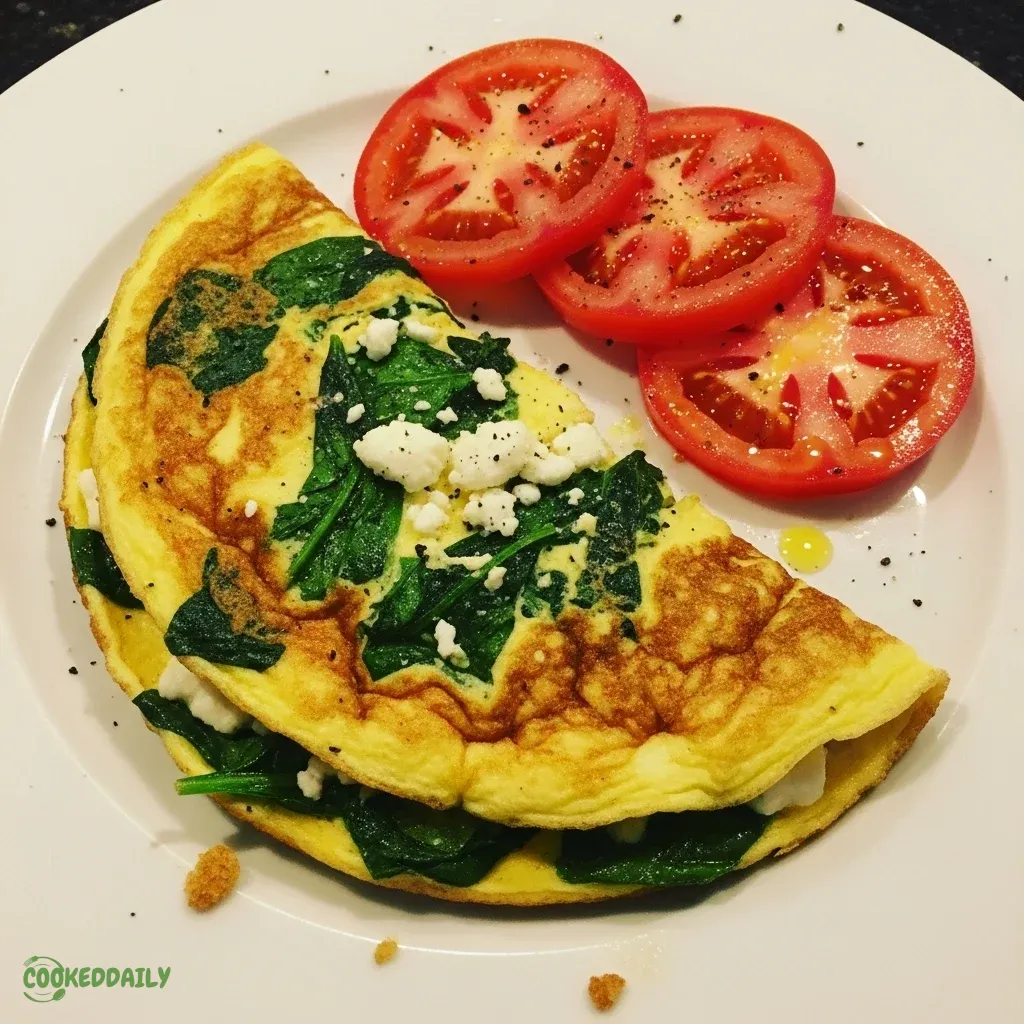
Because this Spinach and Feta Omelet is so simple, your side dishes should also reflect a minimalist philosophy. I often serve this with a side of sliced heirloom tomatoes drizzled with a bit more olive oil and a pinch of salt. This adds a fresh acidity that cuts through the richness of the feta.
If you need more volume, a simple arugula salad with a lemon vinaigrette provides a nice peppery contrast. For those who aren’t strictly low-carb, a piece of toasted sourdough bread is the perfect vessel for any extra feta or egg that escapes the fold.
You might also consider roasted cherry tomatoes or a few spears of grilled asparagus if you are serving this as a light lunch. Keeping the sides clean and vegetable-focused ensures that the Spinach and Feta Omelet remains the star of the show while maintaining a high nutritional profile.
Because this Spinach and Feta Omelet is so simple, your side dishes should also reflect a minimalist philosophy. A great pairing to enhance your meal is this One-Pot Spinach Stew, which keeps things fresh and easy.
FAQs
Can I use frozen spinach for this recipe?
Yes, you can use frozen spinach, but you must be careful. Frozen spinach contains a significant amount of water. You should thaw it completely and squeeze out every drop of excess moisture using a kitchen towel before adding it to the pan. If you skip this step, your Spinach and Feta Omelet will become soggy and will not set properly.
Is this omelet suitable for a Keto diet?
Absolutely. The Spinach and Feta Omelet is an ideal Keto meal because it is high in healthy fats and protein while remaining extremely low in carbohydrates. Using olive oil and pasture-raised eggs ensures you are getting high-quality nutrients that support ketosis. Just be sure to check that your feta cheese does not contain any added fillers or starches.
How do I prevent my omelet from breaking when I fold it?
The key to a perfect fold is patience and the right tools. Ensure you are using a high-quality non-stick skillet and a wide silicone spatula. Wait until the bottom of the eggs is fully set before attempting the fold.
If the center still looks very liquid, it will likely break. Gently sliding the Spinach and Feta Omelet toward the edge of the pan before folding can also make the process much easier.
The Spinach and Feta Omelet is a popular dish that perfectly combines the earthy flavors of spinach with the salty tang of feta cheese. Many enjoy it as a quick and nutritious meal option, often benefiting from the high protein content found in eggs, making it a staple in many households. For more information, visit Omelet.
Nutrition Information (per serving)
This nutritional profile reflects a standard serving using three large eggs, one cup of spinach, and two tablespoons of feta cheese cooked in olive oil. The Spinach and Feta Omelet is a powerhouse of micronutrients and essential amino acids.
| Calories | 320 kcal |
| Total Fat | 24g |
| Saturated Fat | 8g |
| Protein | 22g |
| Net Carbohydrates | 3g |
| Fiber | 1g |
| Iron | 15% DV |
| Vitamin A | 40% DV |
In summary, the Spinach and Feta Omelet is the ultimate solution for anyone seeking a healthy, efficient, and delicious meal. By following these simple steps and focusing on ingredient quality, you can enjoy a gourmet-level breakfast every single morning without the stress or the mess. It fits perfectly into a busy lifestyle and ensures you never have to compromise on nutrition for the sake of speed.
Print
Spinach and Feta Omelet
- Total Time: 10 mins
- Yield: 1 serving 1x
- Diet: Gluten Free, Keto
Description
The Spinach and Feta Omelet combines earthy spinach and creamy feta cheese for a high-protein, quick meal prepared in under ten minutes. It emphasizes efficiency and nutrition with minimal cleanup.
Ingredients
3 Large Pasture-Raised Eggs
1 Heaping Cup Fresh Baby Spinach
2 Tablespoons Feta Cheese
1 Tablespoon Extra Virgin Olive Oil
Sea Salt to Taste
Black Pepper to Taste
Instructions
- Crack the eggs into a bowl, add salt and pepper, and whisk until fluffy
- Heat olive oil in a skillet over medium heat, then sauté spinach until wilted
- Pour eggs over spinach, cook undisturbed for a minute, then gently lift edges
- When eggs are mostly set, add feta cheese on one side and fold the omelet
- Cook for another 30 seconds, then serve
Notes
Use a non-stick skillet for best results.
Opt for dry feta to prevent excess moisture.
Avoid using frozen spinach unless properly thawed and drained.
- Prep Time: 5 mins
- Cook Time: 5 mins
- Category: Breakfast
- Method: Stovetop
- Cuisine: Greek
Nutrition
- Serving Size: 1 omelet
- Calories: 320 kcal
- Sugar: 1 g
- Sodium: 680 mg
- Fat: 24 g
- Saturated Fat: 8 g
- Unsaturated Fat: 16 g
- Trans Fat: 0 g
- Carbohydrates: 3 g
- Fiber: 1 g
- Protein: 22 g
- Cholesterol: 558 mg