

A bowl of Yogurt with Granola and Berries represents the ultimate synergy of flavor, texture, and clinical nutrition. As a nutritionist, I view this dish not just as a breakfast staple but as a functional tool to fuel your body with high-quality proteins and antioxidants. You will enjoy the contrast between the velvety smoothness of the yogurt and the satisfying crunch of toasted oats.
The burst of tartness from fresh fruit balances the natural sweetness of raw honey or maple syrup perfectly. This meal provides a steady release of energy, keeping your blood sugar stable throughout the morning. By choosing Yogurt with Granola and Berries, you are prioritizing your gut health while indulging in a delicious, vibrant treat. Let us explore how this simple combination acts as medicine for your digestive system and brain.
Why You’ll Love This Yogurt with Granola and Berries Recipe
- Nutrient Density: Every spoonful of Yogurt with Granola and Berries delivers essential probiotics, fiber, and vitamin C.
- Speed and Convenience: You can assemble this powerful meal in less than five minutes, making it perfect for busy professionals.
- Sustained Satiety: The combination of protein from the yogurt and complex carbohydrates from the granola keeps hunger hormones at bay.
- Customizable Health: You can easily adapt the Yogurt with Granola and Berries to meet specific dietary needs, such as gluten-free or dairy-free requirements.
Ingredients You’ll Need
Quality matters when you treat food as medicine. I recommend choosing organic ingredients whenever possible to avoid synthetic pesticides and ensure the highest mineral content. For your Yogurt with Granola and Berries, look for Greek yogurt that contains “live and active cultures” to maximize the benefits for your microbiome. Avoid pre-sweetened varieties that contain hidden refined sugars; instead, control the sweetness yourself with natural alternatives.
| Ingredient | Recommended Quantity | Nutritional Benefit |
| Plain Greek Yogurt | 1 Cup | High protein and probiotics for gut health. |
| Homemade Granola | 1/3 Cup | Fiber and healthy fats from seeds and nuts. |
| Fresh Blueberries | 1/4 Cup | Anthocyanins for brain health and inflammation. |
| Fresh Raspberries | 1/4 Cup | High fiber content and vitamin C. |
| Raw Honey or Maple Syrup | 1 Teaspoon | Natural enzymes and mineral-rich sweetness. |
| Chia Seeds | 1 Teaspoon | Omega-3 fatty acids and extra fiber. |
Substitutions & Variations
Note: This video is for demonstration purposes and may use a slightly different method.
Adapting your Yogurt with Granola and Berries to your specific bio-individual needs is easy. If you follow a plant-based diet, swap the dairy yogurt for a high-protein almond or coconut milk yogurt. Ensure the vegan alternative contains minimal thickeners like carrageenan.
For those monitoring their carbohydrate intake, use a grain-free granola made primarily of toasted walnuts, pecans, and sunflower seeds. This modification maintains the crunch while lowering the glycemic load of your Yogurt with Granola and Berries.
You can also rotate your fruit selection based on what is in season. During the autumn, consider topping your Yogurt with Granola and Berries with stewed apples and cinnamon instead of fresh berries. Cinnamon helps improve insulin sensitivity, adding another layer of therapeutic value to your meal.
If you prefer a more tropical profile, mango and hemp hearts provide a unique texture and a different spectrum of vitamins. Always prioritize variety to ensure you consume a wide range of phytonutrients.
If you’re looking to adapt your Yogurt with Granola and Berries to plant-based preferences, consider trying a creamy Greek Yogurt Veggie Dip to enhance your meal. Check it out here.
Step-by-Step Instructions
- Prepare the Base: Spoon one cup of plain, unsweetened Greek yogurt into a clean glass bowl. Stir the yogurt gently to achieve a creamy consistency before adding toppings.
- Add the Fruit: Wash your berries thoroughly and pat them dry. Layer the blueberries and raspberries over the center of the yogurt. Fresh fruit provides the most enzymes for your Yogurt with Granola and Berries.
- Incorporate the Crunch: Sprinkle your homemade granola evenly over the fruit. Using granola toasted in coconut oil or olive oil ensures you avoid inflammatory vegetable oils.
- Boost the Nutrients: Add a teaspoon of chia seeds or flaxseeds. These small additions significantly increase the anti-inflammatory properties of your Yogurt with Granola and Berries.
- Sweeten Naturally: Drizzle a small amount of raw honey or maple syrup over the top. Remember that a little goes a long way in enhancing the flavors without spiking your blood sugar.
- Serve Immediately: Enjoy your Yogurt with Granola and Berries right away to maintain the textural contrast between the soft yogurt and the crunchy oats.
Pro Tips for Success
To elevate your Yogurt with Granola and Berries, focus on the temperature and texture of your ingredients. I suggest using room-temperature yogurt if you have a sensitive digestive system, as cold foods can sometimes dampen “digestive fire.” When choosing granola, look for “clusters” which provide a more satisfying mouthfeel.
If you make your own granola at home, bake it at a low temperature to preserve the delicate oils in the nuts and seeds. High heat can oxidize healthy fats, turning a nutritious topping into an inflammatory one.
Another professional secret involves the “layering” technique. Instead of putting all the granola on top, try creating a parfait. Place half the yogurt, then a layer of berries, then the remaining yogurt, followed by the granola.
This ensures you get a bit of everything in every spoonful of your Yogurt with Granola and Berries. If your yogurt feels too thick, whisk in a tablespoon of filtered water or unsweetened almond milk to create a lighter, fluffier texture that carries flavors more effectively.
For an elevated texture experience, you might want to explore how to create a Greek Yogurt Parfait with Berries, which adds a beautiful presentation to your meal. Learn more about this delightful twist here.
Storage & Reheating Tips
While Yogurt with Granola and Berries tastes best when fresh, you can prepare components in advance. Store your yogurt in an airtight glass container in the refrigerator. Keep the granola in a separate, dry pantry container to maintain its crispness.
If you mix the granola into the yogurt ahead of time, it will absorb moisture and lose its crunch. For “grab-and-go” sessions, pack the yogurt and berries together, but keep the granola in a small silicone pouch to add just before eating.
Do not reheat this dish. Probiotics are living organisms that are highly sensitive to heat. Microwaving your Yogurt with Granola and Berries would destroy the beneficial bacteria that support your immune system and gut lining.
If you prefer a warmer meal in the winter, allow the yogurt to sit on the counter for 15 minutes to take the chill off, rather than applying direct heat. Freshness is the key to maximizing the medicinal value of these live ingredients.
What to Serve With This Recipe
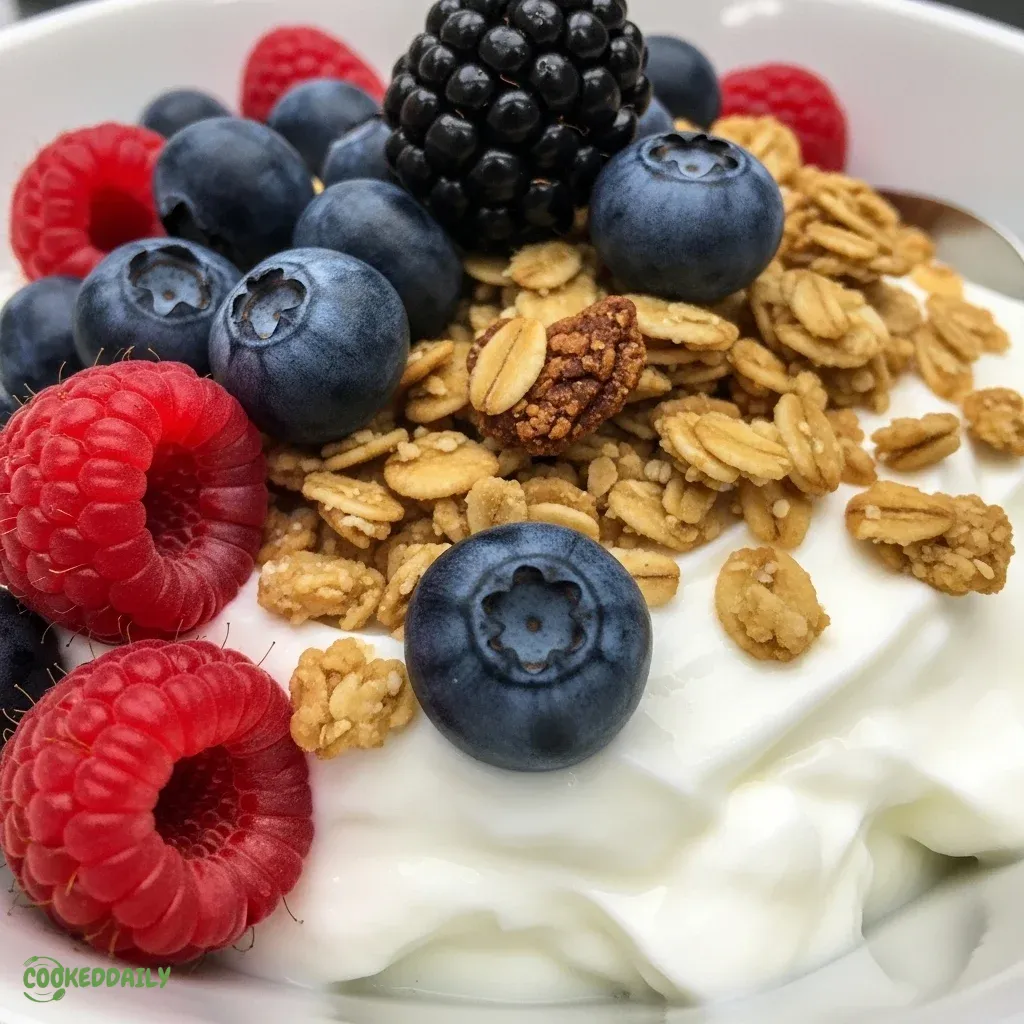
While Yogurt with Granola and Berries is a complete meal on its own, you can pair it with other “clean” foods to create a larger brunch spread. A side of soft-boiled organic eggs provides additional choline for brain health.
If you want more greens, a light salad of arugula and lemon vinaigrette complements the sweetness of the berries. Serving your Yogurt with Granola and Berries alongside a cup of green tea or ginger tea can further stimulate digestion and provide a gentle metabolic boost.
For those who enjoy a savory-sweet balance, consider a small plate of roasted sweet potatoes seasoned with sea salt and rosemary. The complex starches in the potatoes pair beautifully with the high protein content of the yogurt. This combination ensures a diverse intake of fiber types, which feeds different strains of beneficial bacteria in your gut. Always aim for a colorful plate to ensure a broad spectrum of antioxidants alongside your Yogurt with Granola and Berries.
To complement your Yogurt with Granola and Berries, consider pairing it with nutritious Greek Yogurt Balls for a balanced brunch spread. Find the recipe here.
FAQs
Is Yogurt with Granola and Berries good for weight loss?
Yes, this combination is excellent for weight management. The high protein content in Greek yogurt increases the production of fullness hormones like PYY and GLP-1. Meanwhile, the fiber in the berries and granola slows down digestion.
This prevents the insulin spikes that lead to fat storage. When you eat Yogurt with Granola and Berries, you are more likely to stay satisfied until your next meal, reducing the urge to snack on processed foods.
Can I make this recipe dairy-free?
Absolutely. You can substitute dairy yogurt with cashew, almond, or coconut yogurt. When selecting a dairy-free base for your Yogurt with Granola and Berries, check the label for protein content.
Many nut-based yogurts are low in protein compared to dairy. I recommend adding a scoop of clean, plant-based protein powder or extra hemp seeds to the mixture to ensure you maintain the nutritional balance of the original recipe.
What is the healthiest granola to use?
The healthiest granola is one made without refined sugars or inflammatory seed oils like canola or soybean oil. Look for brands that use olive oil or coconut oil and sweeten with small amounts of maple syrup or dates. Ideally, your granola should contain a high ratio of nuts and seeds to oats. This lowers the carbohydrate count and increases the healthy fat content, making your Yogurt with Granola and Berries more heart-healthy and anti-inflammatory.
Yogurt with Granola and Berries combines probiotics from yogurt with the fiber of granola and fresh fruit, creating a nutritionally balanced meal. This combination can be part of a healthy diet that supports digestion and overall health, as described in this article.
Nutrition Information (per serving)
This nutritional profile reflects a standard serving using low-fat Greek yogurt and a homemade nut-based granola. Using Yogurt with Granola and Berries as a meal replacement provides a balanced ratio of macronutrients essential for metabolic health. The inclusion of berries ensures a low-calorie but high-nutrient impact.
| Metric | Amount |
| Calories | 320 kcal |
| Total Fat | 12g |
| Saturated Fat | 3g |
| Protein | 18g |
| Total Carbohydrates | 35g |
| Dietary Fiber | 7g |
| Sugars (Natural) | 14g |
By integrating Yogurt with Granola and Berries into your weekly routine, you are taking a proactive step toward better health. This recipe proves that fast food can be healthy food when you choose “clean” ingredients and understand the science of nutrition. Remember to listen to your body and adjust the portions of your Yogurt with Granola and Berries based on your activity levels. Enjoy the vibrant colors and the life-giving nutrients in every bowl.
Print
Yogurt with Granola and Berries
- Total Time: 5 mins
- Yield: 1 serving 1x
- Diet: Gluten Free
Description
Yogurt with Granola and Berries combines high-quality proteins, antioxidants, and delicious flavors in a quick and nutritious meal. It's beneficial for gut health and keeps you satiated throughout the morning.
Ingredients
1 cup Plain Greek Yogurt
1/3 cup Homemade Granola
1/4 cup Fresh Blueberries
1/4 cup Fresh Raspberries
1 teaspoon Raw Honey or Maple Syrup
1 teaspoon Chia Seeds
Instructions
- Spoon one cup of plain Greek yogurt into a clean glass bowl and stir gently to achieve a creamy consistency
- Wash and pat dry the berries, then layer the blueberries and raspberries over the center of the yogurt
- Sprinkle the homemade granola evenly over the fruit
- Add a teaspoon of chia seeds for additional nutrients
- Drizzle a small amount of raw honey or maple syrup over the top
- Serve immediately to enjoy the contrast between the yogurt and granola
Notes
Use organic ingredients whenever possible for the best health benefits.
For dairy-free options, substitute Greek yogurt with almond or coconut yogurt.
For variety, rotate fruit selection based on seasonal availability.
- Prep Time: 5 mins
- Cook Time: 0 mins
- Category: Breakfast
- Method: No-Cook
- Cuisine: American
Nutrition
- Serving Size: 1 bowl
- Calories: 320 kcal
- Sugar: 14g
- Sodium: 75mg
- Fat: 12g
- Saturated Fat: 3g
- Unsaturated Fat: 9g
- Trans Fat: 0g
- Carbohydrates: 35g
- Fiber: 7g
- Protein: 18g
- Cholesterol: 10mg